
When Deck Over Trailers Make Loading Equipment Easier
A deck-over design can make wide equipment, pallets and jobsite materials easier to load. This guide explains when the higher, full-width deck pays off and when another trailer type may fit better.
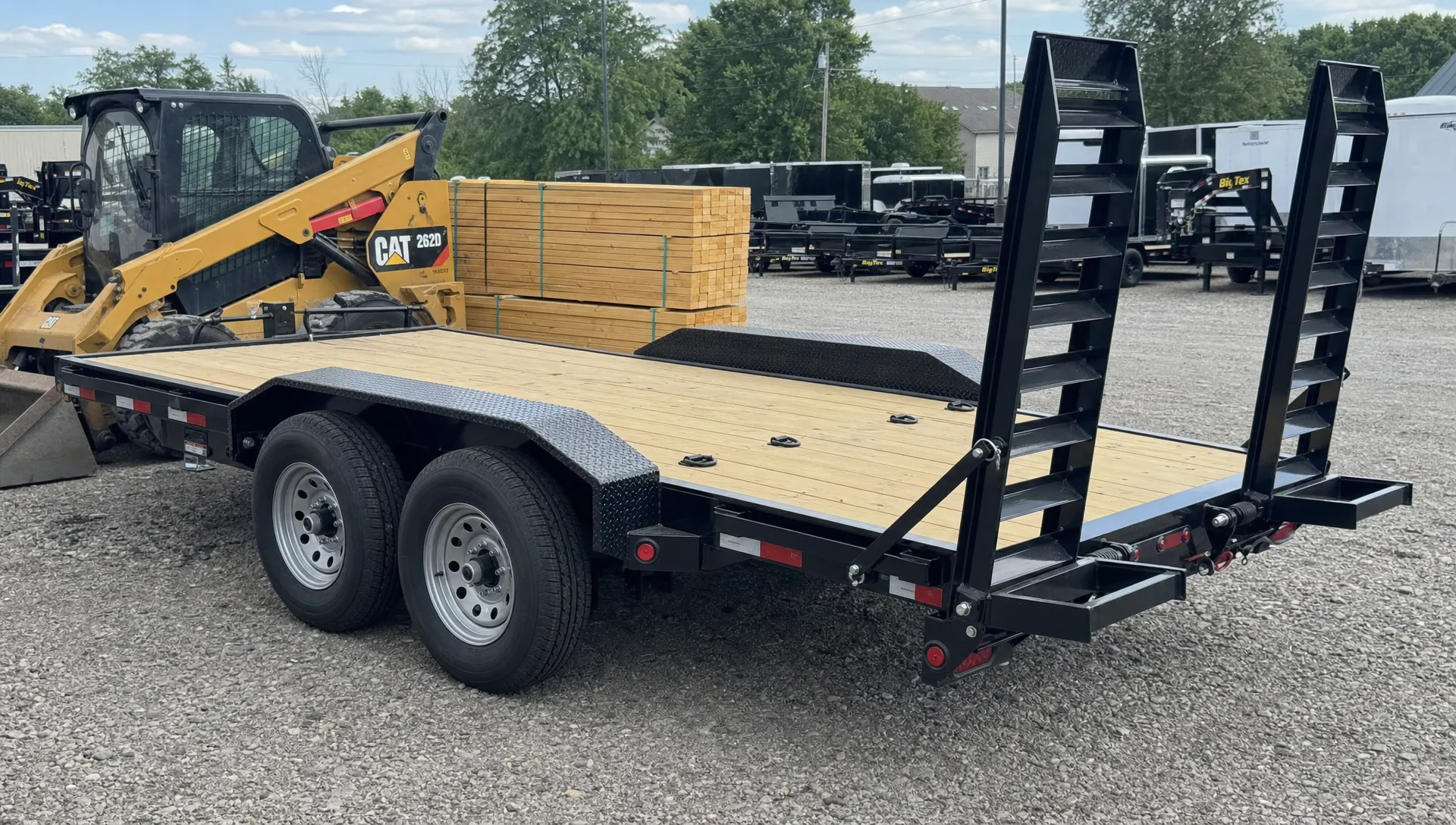
For crews that move skid steers, compact tractors, pallets, pipe, lumber or jobsite supplies, deck over trailers can remove one of the most common loading headaches: working around wheel wells. By raising the deck above the tires, the trailer gives you a flatter, wider platform for equipment and materials that do not fit neatly between fenders.
That design is not automatically better for every hauling job. It can make loading easier for wide equipment and forklift-loaded materials, but the higher deck height changes ramp angle, center of gravity and towing feel. The smart move is to match the trailer layout to the way you actually load, unload and secure cargo during a normal workday.
Why deck over trailers make wide loads easier
The practical advantage is simple: the trailer bed is not interrupted by fenders. On a standard equipment trailer, fenders reduce the usable flat surface between the wheels. For contractors loading a compact machine with wide tracks, bundles of lumber or oversized pallets, deck over trailers reduce the need to angle, shimmy or repeatedly reposition the load.
Side loading is another major benefit. If your crew uses a forklift to place pallets of block, roofing material, landscape stone or agricultural supplies, an open full-width deck can be easier to approach from either side. That matters on crowded jobsites where backing into the perfect loading position is not always possible.
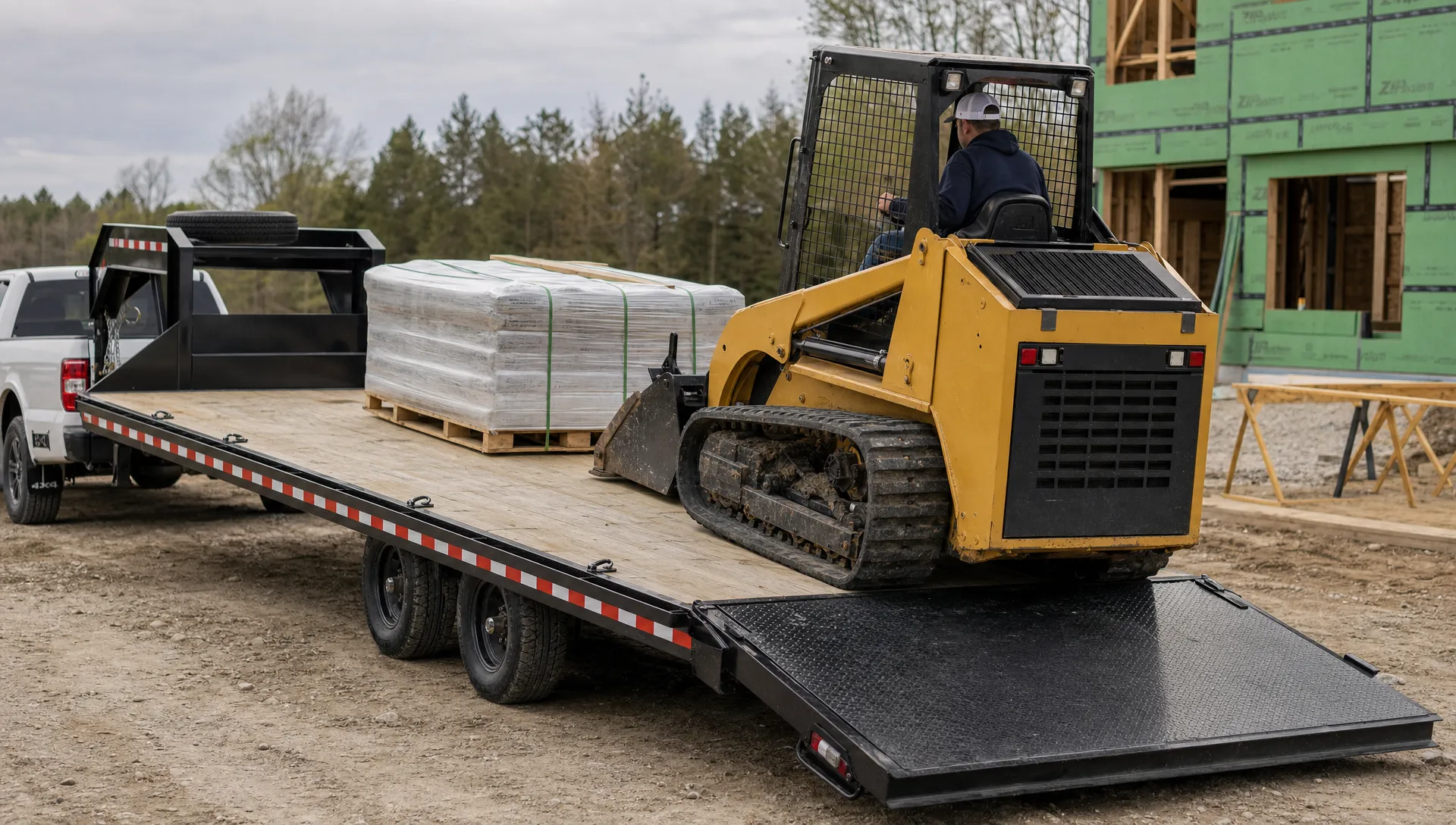
There is a trade-off. Because the deck sits higher, equipment climbs a steeper path unless the trailer is paired with the right ramps, dovetail or loading setup. For low-clearance vehicles or hand-loaded cargo, a lower trailer may feel easier and safer.
What changes with a deck-over trailer design
A deck-over layout moves the load platform above the tire and fender assembly. That creates a cleaner rectangle of usable deck space, which is why the design is common on many flatbed, gooseneck and heavy-duty equipment hauling setups.
The biggest advantage of deck over trailers is the combination of width and access. Instead of planning every load around fenders, operators can focus on load balance, tie-down placement and axle capacity.
| Trailer layout | Loading advantage | Best suited for | Watch for | |----------------|-------------------|-----------------|-----------| | Deck-over trailer | Flat deck with no fender intrusion | Wide equipment, pallets, building materials, farm supplies | Higher deck height and steeper ramp angle | | Standard equipment trailer | Lower deck height | Skid steers, small tractors, mowers, compact equipment | Fender clearance limits usable width | | Enclosed cargo trailer | Weather protection and security | Tools, merchandise, small equipment, personal cargo | Interior height, rear door style and payload limits | | Dump trailer | Hydraulic unloading for loose material | Gravel, mulch, debris, soil | Load distribution and safe dumping area |
This is why many buyers compare deck-over models against equipment trailers, flatbeds and enclosed cargo trailers before purchasing. The best trailer is the one that fits the load, tow vehicle, loading method and jobsite conditions.
Best hauling situations for deck-over trailers
Wide equipment, attachments and irregular loads
Contractors, landscapers and farmers often haul equipment that is technically towable on a standard trailer but awkward to position. Attachments, forks, buckets, implements and spare materials can make a load wider or less predictable than the machine itself.
In these cases, deck over trailers help because the full deck can be used from edge to edge. A compact tractor with an attachment, a pallet beside a small machine or a mixed load of tools and materials may be easier to stage when fenders are no longer in the way.
Forklift loading at yards and jobsites
Deck-over designs are especially useful when materials are loaded by forklift. Lumber yards, masonry suppliers, roofing distributors and agricultural operations often load from the side. A full-width open deck gives the forklift operator better access and can reduce awkward lifting angles.
If you frequently receive palletized materials, think beyond trailer length. The number of pallets, their dimensions, the unloading method and where the trailer will sit on the jobsite all matter. A trailer that is easy to load at the supplier but difficult to unload at the destination still slows the work down.
Agricultural and construction material hauling
Farmers and ranchers may use a deck-over style for hay, feed, fencing materials, compact implements, water tanks or general supplies. Construction crews may use it for forms, pipe, lumber, pallets, small machines and jobsite equipment.
For mixed commercial loads, deck over trailers can offer more flexibility than a trailer with fixed side walls or interior dimensions. That flexibility is valuable when every day brings a different combination of equipment and materials.
When another trailer may be smarter
If you are comparing deck over trailers against cargo, dump or standard equipment trailers, start with the main problem you need to solve. A deck-over can be excellent for open, wide or forklift-loaded cargo, but it does not protect tools from weather and it may not be the easiest choice for low-clearance vehicles.
For secure enclosed hauling, a cargo trailer may make more sense. The Universal Trailers 8'6" X 16' Continental Cargo - Tailwind Model w/ Barn Doors, 10K GVWR is an enclosed cargo option listed with a black exterior, 2700 lb empty weight and 10K GVWR, making it relevant for buyers who need to haul equipment, tools or vehicles inside an enclosed trailer rather than on an open deck.
Another enclosed option to compare is the Universal Trailers 8'6" X 16' Continental Cargo - BISON SERIES w/ Windows, Awning, Ramp Door. Its ramp door, windows and awning make it a different fit from an open deck-over trailer, especially for buyers hauling tools, equipment or merchandise where enclosed transport and rear ramp access are priorities.
Loading details that affect safety and ease of use
Because deck over trailers sit higher than many standard equipment trailers, loading angle deserves close attention. A machine that climbs easily onto a low trailer can drag, scrape or feel unstable on a steeper ramp. Ramp length, ramp capacity, surface traction and the breakover angle of your equipment should all be checked before purchase.
Tow ratings matter just as much as deck layout. GVWR, payload capacity, axle rating and the tow vehicle rating work together. The Prime Trail Trailers buyer's guide is a helpful next step if you are still matching trailer size, cargo weight and tow vehicle limits.
The National Highway Traffic Safety Administration also advises drivers to stay within vehicle and trailer limits, inspect equipment before towing and understand how a trailer changes braking and handling. You can review its general trailer towing safety guidance when planning a hauling setup.
| Loading question | Why it matters | |------------------|----------------| | How wide is the equipment at its widest point? | Attachments, tires and tracks may require more flat deck space than expected. | | Will loading happen from the rear, side or both? | Forklift side loading favors open full-width deck access. | | What is the loaded weight, not just empty machine weight? | Fuel, attachments, tools and materials all reduce available payload. | | Does the equipment have low ground clearance? | Higher deck height can create a steeper approach. | | Where will tie-downs connect? | Securement points must match the load and hauling direction. |
Commercial operators should also pay attention to cargo securement. The Federal Motor Carrier Safety Administration publishes cargo securement rules that are especially relevant for businesses hauling equipment and materials on public roads.
How to choose the right deck-over setup
The right deck over trailers for sale are not chosen by length alone. A 20 ft trailer with the wrong ramp setup, insufficient payload or poor tie-down layout can be less useful than a shorter trailer matched correctly to the job.
Start by listing your three most common loads. Include the heaviest machine, the widest attachment and the materials you haul most often. Then compare those requirements to deck length, deck width, GVWR, axle configuration, coupler type, ramp style and tie-down placement.
A practical buying checklist includes:
- Maximum loaded weight, including attachments and supplies
- Equipment width, wheelbase and ground clearance
- Rear loading, side loading or both
- Ramp length, traction and rated capacity
- Tow vehicle rating, hitch type and braking setup
- Tie-down locations for machines, pallets and mixed cargo
If your hauling needs change by season, choose for the hardest recurring job rather than the easiest one. A landscaper hauling mowers all week may still need enough capacity and deck space for pallets of stone or seasonal cleanup equipment. A farmer may need a trailer that handles both implements and bulk supplies.
Deck-over vs equipment vs enclosed cargo trailers
A deck-over trailer can be the best fit when width and forklift access matter most. A standard equipment trailer may be better when lower loading height is more important. An enclosed cargo trailer is often the stronger choice when tools, parts, merchandise or equipment need protection from weather and theft.
| Buyer priority | Trailer type to consider first | Reason | |----------------|-------------------------------|--------| | Full-width open deck | Deck-over or flatbed trailer | Better for wide loads and side loading | | Lower loading angle | Standard equipment trailer | Easier for many compact machines and vehicles | | Loose material unloading | Dump trailer | Built for gravel, mulch, debris and similar loads | | Weather-protected hauling | Enclosed cargo trailer | Keeps tools, merchandise and equipment inside an enclosed body | | Heavy commercial hauling | Gooseneck or heavy-duty trailer | Often preferred for larger loads when properly matched to the tow vehicle |
This comparison also helps buyers avoid overbuying or underbuying. A high deck can be a real advantage for one crew and a daily inconvenience for another. The goal is not to buy the biggest trailer available, it is to buy the trailer that reduces loading time without creating new towing or safety problems.
Buying with Prime Trail Trailers
Prime Trail Trailers helps commercial, agricultural and personal-use buyers compare trailer types, specifications and hauling applications before purchase. Whether you are looking at open equipment trailers, enclosed cargo trailers, dump trailers, car haulers, gooseneck trailers or flatbed options, the key is to match the trailer to the way you work.
If deck over trailers are on your shortlist, compare them against the loads you haul every week. If your main need is full-width deck space and easier forklift access, a deck-over or flatbed style may be the right direction. If you need enclosed storage, weather protection or a lower rear ramp setup, compare enclosed cargo options as well.
You can also explore more buying, towing and maintenance topics in the Prime Trail Trailers guide library as you narrow your options.
Frequently Asked Questions
Are deck over trailers easier to load than standard equipment trailers? They can be easier for wide loads, palletized materials and forklift side loading because the deck is not interrupted by fenders. For low-clearance machines, a standard equipment trailer with a lower deck may be easier.
What equipment is best suited for a deck-over trailer? Compact tractors, construction attachments, pallets, farm supplies, lumber, pipe and mixed jobsite materials are common fits when the load benefits from full-width deck space.
Do deck over trailers have a higher center of gravity? Yes, the deck sits above the wheels, so the load rides higher than on many low-deck equipment trailers. Proper loading, weight distribution, tie-downs and cautious driving are important.
Should I choose a deck-over trailer or an enclosed cargo trailer? Choose a deck-over style when open deck width and side access matter most. Choose an enclosed cargo trailer when protecting tools, equipment or merchandise from weather and theft is the bigger priority.
Can Prime Trail Trailers help me compare trailer types? Yes. Prime Trail Trailers offers sales assistance and online inventory so buyers can compare trailer categories, specifications and available units before requesting pricing or availability.
Ready to compare trailer options?
If you are deciding whether a deck-over, equipment, flatbed, enclosed cargo or dump trailer is the right fit, Prime Trail Trailers can help you evaluate your hauling needs and compare available options. Browse current trailers for sale at Prime Trail Trailers or request assistance choosing the right trailer for your work, farm, business or personal hauling project.
Have Questions? We're Here to Help
Still unsure which trailer fits your needs, or need specs, pricing or delivery advice? The Prime Trail Trailers team is ready to answer your questions and help you find the right rig.