
Small Enclosed Cargo Trailer Buying Guide for Work and Home
Choosing the right enclosed trailer starts with size, payload, doors and how you actually haul. This guide helps contractors, homeowners and small businesses compare practical options before buying.
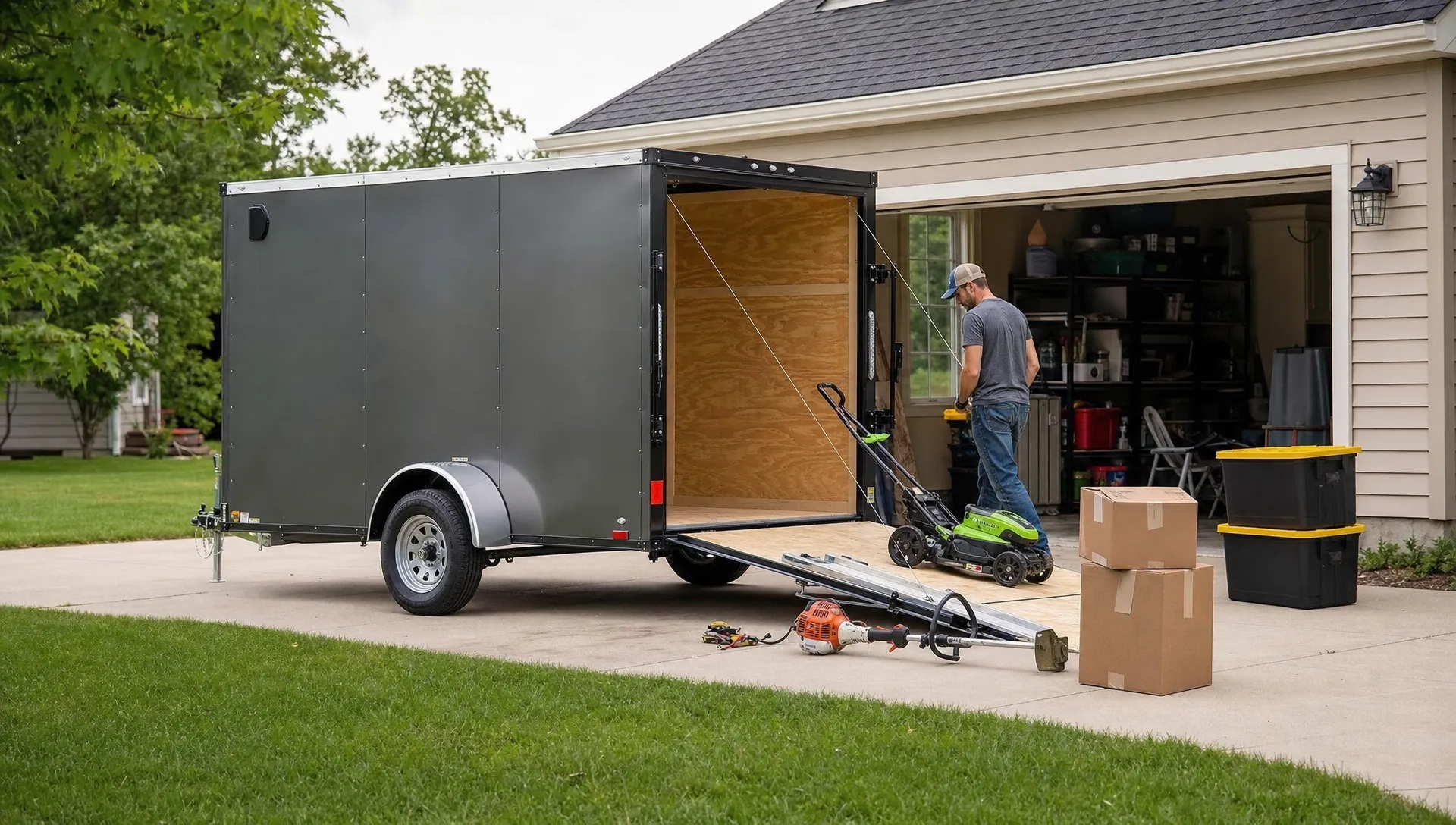
A small enclosed cargo trailer is one of the most practical purchases for contractors, homeowners and small businesses that need secure, weather-protected hauling without jumping straight into a large commercial trailer. It can carry tools, jobsite materials, lawn equipment, moving boxes, event supplies or recreational gear, then stay locked up between trips.
The challenge is that “small” covers a wide range of trailers. A 5x8 enclosed trailer and a 6x12 cargo trailer both fit the small-trailer conversation, but they serve different loads, tow vehicles and daily routines. This guide explains how to compare size, GVWR, doors, interior features and buying options so you can shop with confidence instead of guessing from photos alone.
When a small enclosed cargo trailer makes sense
A small enclosed cargo trailer makes the most sense when the load is valuable enough to protect but not heavy enough to require a large equipment trailer or gooseneck. Tradespeople often choose enclosed trailers because tools stay out of rain, snow, road grit and direct public view. Homeowners like them because they are easier to store than larger trailers and can handle repeated weekend projects.
For work use, enclosed cargo trailers are common among electricians, plumbers, remodelers, flooring installers, mobile detailers, painters and landscapers who carry compact equipment. For home use, they are useful for moving furniture, hauling supplies, transporting powersports gear or storing seasonal items during a renovation.
If your main cargo is loose gravel, mulch or demolition debris, a dump trailer may be a better fit. If you haul oversized equipment that does not need weather protection, an open utility or flatbed trailer may be more efficient. If theft visibility, tool organization and weather resistance matter, an enclosed trailer deserves serious consideration. Prime Trail Trailers also has a useful guide on how a covered trailer protects valuable loads if you are comparing open and enclosed options.
Choosing the right enclosed trailer size
The right small enclosed cargo trailer size depends on three things: the largest item you plan to load, the total weight of your normal cargo and how much extra room you need to move around inside. Buyers often focus on length first, but width, interior height and door opening can matter just as much.
A 5x8 trailer is easy to tow and store, but it can feel tight if you need shelving or long-handled tools. A 6x10 or 6x12 gives more working room and is often more practical for contractors who want to organize tools along the walls. Larger 7-foot-wide or 8.5-foot-wide trailers provide more floor space, but they also require more attention to tow vehicle capacity, mirrors and parking space.
| Common enclosed trailer size | Best suited for | Buyer considerations | |---|---|---| | 5x8 | Home projects, light tools, camping gear, small equipment | Compact and easy to store, but limited room for shelving or bulky cargo | | 6x10 | Small business use, lawn tools, moving boxes, compact machines | Good balance of space and manageability for many buyers | | 6x12 | Contractors, landscapers, mobile service setups, frequent hauling | More layout flexibility, but verify loaded weight and tow rating | | 7x14 | Larger tool packages, event equipment, heavier home or work loads | More space, often a step up in towing demands | | 8.5x16 | Commercial hauling, multiple machines, vehicle or large equipment use | Not usually considered “small,” but worth comparing if you are outgrowing compact sizes |
For a compact example, the 5' x 8' Continental Cargo Venture Edition shows the kind of footprint many buyers consider for light hauling and easy storage. Buyers who want more room for ramps, toolboxes or small commercial equipment may also compare a 6' x 10' Continental Cargo V-Series when browsing enclosed cargo trailers for sale.
GVWR, payload and tow vehicle fit
Before you choose a small enclosed cargo trailer, check the weight ratings instead of relying only on trailer size. GVWR, or gross vehicle weight rating, is the maximum allowed weight of the trailer plus cargo. Payload is what the trailer can carry after subtracting the trailer’s empty weight. Your tow vehicle also has its own tow rating, hitch rating and tongue weight limits.
For example, a trailer may look small enough for a midsize SUV or half-ton truck, but the loaded weight can climb quickly once you add tools, fasteners, compressors, generators, tile, flooring, cabinets or landscape equipment. That is why commercial buyers should estimate their normal load, not just their lightest load.
Use this simple buying process before requesting pricing or availability:
- List your heaviest regular cargo items and estimate total weight.
- Confirm your tow vehicle’s towing capacity, payload rating and hitch rating.
- Compare trailer GVWR, axle rating and listed empty weight when available.
- Leave a safety margin instead of planning to tow at the limit every day.
- Check whether brakes, breakaway equipment and lighting meet your state and use-case requirements.
If you are new to these terms, Prime Trail Trailers’ broader Trailer Buyer’s Guide explains how GVWR, payload and trailer type affect the buying decision.
Barn doors, ramp doors and side access
Door layout can make or break a trailer purchase. Barn doors swing open from the back and are useful when backing up to a dock, loading boxes by hand or working in tight areas where a ramp would take up too much room. Ramp doors are better when you roll in mowers, carts, motorcycles, snowblowers or wheeled equipment.
Side doors are also worth considering for daily work. A curbside entry door can let you grab frequently used tools without lowering the rear ramp or unloading cargo. For contractors, that can save time across multiple stops in a day. For homeowners, it makes the trailer more convenient when it is parked in a driveway or storage area.
If you are comparing compact trailers but realize you need significantly more interior room, a 16-foot enclosed trailer may be the better long-term investment. The Universal Trailers 8'6" X 16' Continental Cargo - Tailwind Model w/ Barn Doors, 10K GVWR is listed as an 8.6 x 16 Tailwind enclosed cargo trailer designed for secure hauling of equipment, tools or vehicles. Another step-up option is the Universal Trailers 8'6" X 16' Continental Cargo - BISON SERIES w/ Windows, Awning, Ramp Door, which is listed with windows, an awning and a ramp door for buyers who need a different access setup.
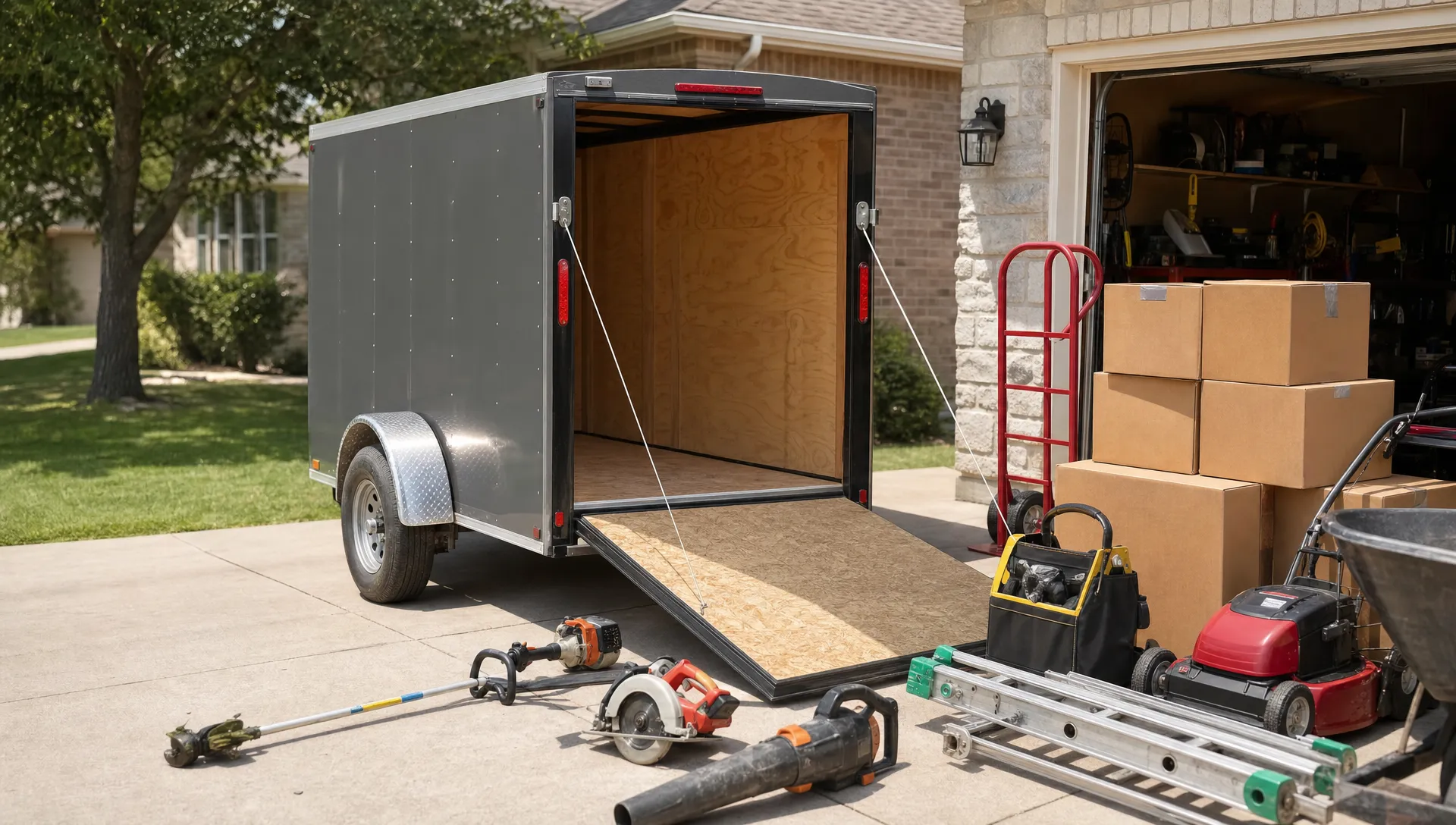
Features that matter for work and home use
A small enclosed cargo trailer should be evaluated like a working tool, not just a box on wheels. The right feature package depends on whether you haul a few times per year or rely on the trailer for daily income.
For work, look closely at tie-down points, interior wall strength, floor construction, roof design, lighting, wiring protection and door hardware. Tradespeople may want room for shelves, bins and tool racks, but every storage addition adds weight. Landscapers and mobile service businesses should think about how often they roll equipment in and out, whether fuel odors need ventilation and whether the trailer will be loaded in low-light conditions.
For home use, convenience may matter more than maximum buildout. A trailer that is easy to back into a driveway, store near a garage and load without straining can be more useful than a bigger trailer that feels like a chore to move. Interior height is also important if you plan to walk inside while loading furniture, bicycles or tall equipment.
When comparing listings, pay attention to these details:
- Rear door type, including barn doors or ramp door.
- Side door availability and placement.
- Interior height and rear door opening height.
- Tie-down options for securing cargo.
- Axle, tire and brake configuration.
- Floor and wall material descriptions.
- Lighting, wiring and exterior visibility.
- Listed empty weight, GVWR and overall dimensions.
If you are leaning toward a 16-foot enclosed trailer because you want shelving, equipment zones or a mobile work layout, this guide to making the most of an enclosed 16 foot trailer can help you think through space planning before buying.
New vs used enclosed cargo trailers
A used small enclosed cargo trailer can be a smart buy when the condition, title, tires, floor, frame and doors check out. The risk is that hidden water damage, worn suspension parts, weak flooring or electrical problems can turn a cheap trailer into an expensive project. For commercial buyers, downtime is also a cost.
New trailers appeal to buyers who want a clean starting point, current specifications and a trailer they can set up for their own use from day one. Used trailers may offer savings, but inspection matters. Look for roof leaks, soft spots in the floor, cracked sealant, uneven tire wear, damaged wiring, rust, loose hinges and signs that the trailer was overloaded.
The right choice depends on budget, availability and how hard you plan to work the trailer. A homeowner moving seasonal gear may be comfortable with a well-kept used unit. A contractor who depends on the trailer five or six days per week may prefer the predictability of a new trailer or a carefully inspected used model from a professional dealership.
How to match a trailer to your real hauling routine
Many buyers start with the question, “What size can I afford?” A better question is, “What size will I use correctly?” A trailer that is too small gets overloaded or disorganized. A trailer that is too large can be harder to tow, park and justify for occasional hauling.
For contractors, map out a normal workday. Think about the tools that stay in the trailer, the supplies that change by job and the equipment that must be accessed first. If you need to unload half the trailer to reach a tool, the layout is wrong or the trailer is too small.
For homeowners, consider storage space and frequency of use. If the trailer will sit in a garage or beside a house, measure the full storage area, not just the trailer box length. Include tongue length, rear door clearance and space to maneuver around it.
For small businesses, also think about branding, security and repeatability. Enclosed trailers can support a more professional setup because tools and supplies can stay organized between jobs. That advantage only works if the trailer has enough capacity and access points for your daily routine.
Buying from Prime Trail Trailers
Prime Trail Trailers helps buyers compare new and used trailers for work, business, agricultural and personal hauling. Inventory can include enclosed cargo trailers, utility trailers, dump trailers, equipment trailers, car haulers, flatbeds, goosenecks and other heavy-duty options, depending on current availability.
When you are ready to shop, compare actual listings rather than generic size charts alone. Look at dimensions, GVWR, empty weight when listed, door layout, photos and any available configuration details. If you are unsure which trailer fits your tow vehicle or cargo, request assistance before committing. A short conversation can prevent buying a trailer that is too small, too heavy or poorly matched to your job.
You can browse available trailers at Prime Trail Trailers to compare current inventory, review specifications and request pricing or availability.
Frequently Asked Questions
What size small enclosed cargo trailer should I buy? For light home use, a 5x8 may be enough. For contractors and small businesses, a 6x10 or 6x12 often provides more practical room for tools, shelving and equipment. Always confirm interior dimensions, payload and tow vehicle limits before buying.
Is a ramp door or barn door better? A ramp door is usually better for rolling equipment like mowers, motorcycles, carts and wheeled tools. Barn doors can be better for loading boxes, backing near docks or working in tight spaces where a ramp would be inconvenient.
Can I use an enclosed cargo trailer for landscaping? Yes, many landscapers use enclosed trailers for mowers, trimmers, blowers and hand tools. Pay close attention to ramp strength, ventilation, tie-downs, floor durability and loaded weight.
Do enclosed trailers need brakes? Brake requirements depend on trailer weight, state rules and trailer configuration. Many larger or heavier trailers are equipped with brakes, but you should verify the specific listing and confirm what your tow vehicle and local regulations require.
Should I buy new or used? New trailers are appealing when you want a clean setup and current specifications. Used trailers can be a good value if the frame, floor, roof, tires, lights, title and doors are in good condition.
Ready to compare enclosed trailers for work or home?
The best trailer is the one that fits your cargo, tow vehicle, storage space and daily routine. If you are choosing between compact enclosed trailers and larger cargo trailer options, Prime Trail Trailers can help you compare available units and narrow the search.
Browse current inventory, review trailer specifications or contact Prime Trail Trailers for help choosing the right enclosed trailer for your next job, move or project.
Have Questions? We're Here to Help
Still unsure which trailer fits your needs, or need specs, pricing or delivery advice? The Prime Trail Trailers team is ready to answer your questions and help you find the right rig.