
Tilt Trailer vs. Ramps: Which Is Best for Hauling Heavy Equipment?
Compare tilt trailers and traditional ramps for hauling heavy equipment. Learn the pros, cons, load angles, and payload capacities to choose the right trailer.
Quick Summary
Compare tilt trailers and traditional ramps for hauling heavy equipment. Learn the pros, cons, load angles, and payload capacities to choose the right trailer.
Loading heavy machinery onto a trailer is one of the most critical and potentially dangerous parts of any hauling job. Whether you are moving a skid steer, a mini excavator, or a low-clearance scissor lift, the method you use to get that equipment onto the deck matters. For decades, traditional ramps were the standard, but tilt trailers have rapidly become the go-to choice for commercial haulers and construction crews prioritizing safety and speed. Choosing between a tilt trailer and a ramp-equipped trailer comes down to your specific payload, budget, and daily operational needs.
In this comprehensive guide, we will break down the core differences between tilt deck trailers and traditional ramp setups, compare hydraulic versus gravity tilt mechanisms, and help you determine which configuration is best for your fleet.
The Core Difference: Tilt Trailers vs. Ramps
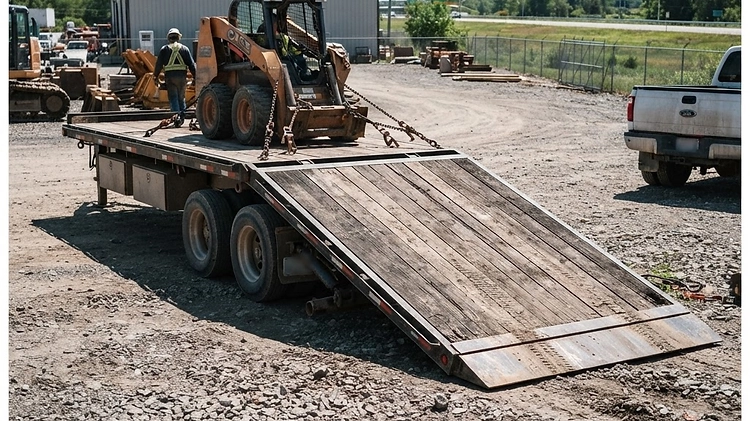
The fundamental difference between these two trailer types lies in how the loading incline is created. A traditional equipment trailer features a fixed, stationary deck. To load cargo, you must manually deploy, slide out, or fold down heavy steel or aluminum ramps at the rear.
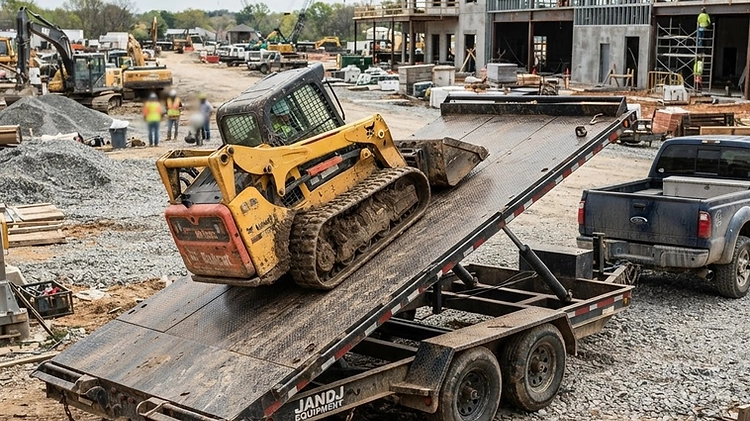
Conversely, a tilt trailer (or tilt deck trailer) uses a mechanical pivot system to angle the entire deck—or a large portion of it—down to the ground. This creates a seamless, continuous incline from the ground to the trailer bed, eliminating the need to handle separate ramps.

Traditional Ramp Configurations
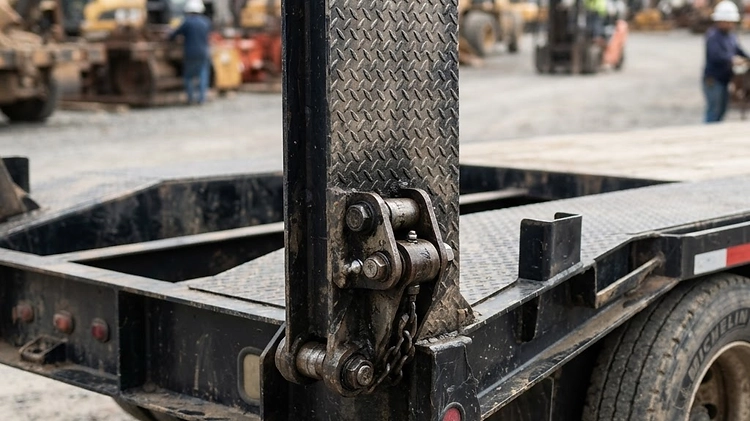
Traditional ramps come in several styles, each with its own operational quirks:
- Slide-In Ramps: Stored underneath the trailer deck. They are lightweight but require manual lifting and alignment, which can be physically taxing.
- Stand-Up Ramps: Hinged at the rear of the trailer and folded up during transport. They are easier to deploy than slide-in ramps but create significant wind drag, reducing fuel efficiency.
- Mega Ramps (Monster Ramps): Extra-wide, heavy-duty ramps that fold over flat onto the deck. They offer a wider loading surface but are incredibly heavy, often requiring spring assist to lift.
Tilt Deck Configurations
Tilt trailers simplify the process by moving the deck itself. They generally come in two styles:
- Full Tilt: The entire deck tilts backward. This is ideal for loading single, large pieces of equipment like cars or large tractors.
- Split Deck (Industrial Tilt): The front portion of the deck (usually 4 to 8 feet) remains stationary, while the rear portion tilts. This allows you to load attachments, pallets, or a second small machine on the front stationary deck, then tilt the rear to load the primary equipment.
Advantages of a Tilt Deck Trailer
For contractors and hotshot drivers who load and unload multiple times a day, tilt trailers offer undeniable advantages that directly impact the bottom line and operator safety.
1. Enhanced Safety and Reduced Physical Strain
Manual ramps are heavy. Lifting, sliding, and aligning 80-pound steel ramps multiple times a day is a leading cause of back injuries among operators. Furthermore, ramps can slip, kick out, or bend if not perfectly aligned with the equipment's wheelbase. A tilt trailer eliminates manual lifting. You simply release a latch or push a button, and the deck lowers securely to the ground. There is no risk of a ramp kicking out under the weight of a 10,000-pound machine.
2. Superior Loading Angles for Low-Clearance Equipment
Equipment like scissor lifts, forklifts, and sports cars have incredibly low ground clearance. Traditional ramps often create a sharp break-over angle at the top of the ramp, causing low-clearance equipment to high-center or scrape. Tilt trailers typically offer a much lower, continuous load angle (often between 10 and 15 degrees), making them the superior choice for paving equipment and warehouse machinery.
3. Speed and Efficiency
Time is money on a job site. Deploying, aligning, and stowing manual ramps can take 10 to 15 minutes per stop. A hydraulic tilt deck can be lowered, loaded, and locked in under three minutes. If you are running a delivery route or moving equipment across trailers for sale in Texas, that time savings translates to extra jobs completed per week.

Advantages of Traditional Ramps
Despite the convenience of tilt decks, traditional ramp trailers remain incredibly popular for several valid reasons.
1. Higher Payload Capacity
Tilt mechanisms—including the heavy-duty pivot points, hydraulic cylinders, pumps, and batteries—add significant empty weight (tare weight) to the trailer. A standard flatbed with ramps will almost always weigh less than a similarly sized tilt trailer. This means that for a given Gross Vehicle Weight Rating (GVWR), the ramp trailer will offer a higher legal payload capacity. If you are maxing out your weight limits hauling heavy excavators, a traditional equipment trailer might be necessary to stay compliant.
2. Lower Initial Cost and Maintenance
Tilt trailers are more complex machines. They require hydraulic fluid, battery maintenance, and regular greasing of pivot points. Traditional ramp trailers are simple, rugged, and significantly cheaper to purchase upfront. There are no hydraulic pumps to fail or batteries to die in the middle of a job in Dallas, TX.
3. Versatility for Odd Loads
If you frequently haul palletized freight, lumber, or pipe, a fixed flatbed with slide-in ramps offers a completely flat, stable surface without the split-deck gap found on many industrial tilt trailers.
Power Tilt vs. Gravity Tilt: Which Mechanism Wins?
If you decide that a tilt trailer is the right choice for your business, you must then choose between a gravity tilt and a power tilt mechanism.
Gravity Tilt (Cushion Cylinder)
Gravity tilt trailers use a hydraulic dampening cylinder (similar to a heavy-duty shock absorber) rather than a powered pump. To operate, you release the locking latch, and the deck tilts backward under its own weight (or with a slight push). As you drive your equipment onto the deck and pass the pivot point, the weight shifts forward, and the cushion cylinder slowly and smoothly lowers the deck back to the horizontal position.
- Pros: No batteries to charge, no pumps to fail, lower cost, highly reliable.
- Cons: Requires the load's center of gravity to shift perfectly to lower the deck. Not ideal for loading dead vehicles or multiple lightweight items.
Power Tilt (Hydraulic Pump)
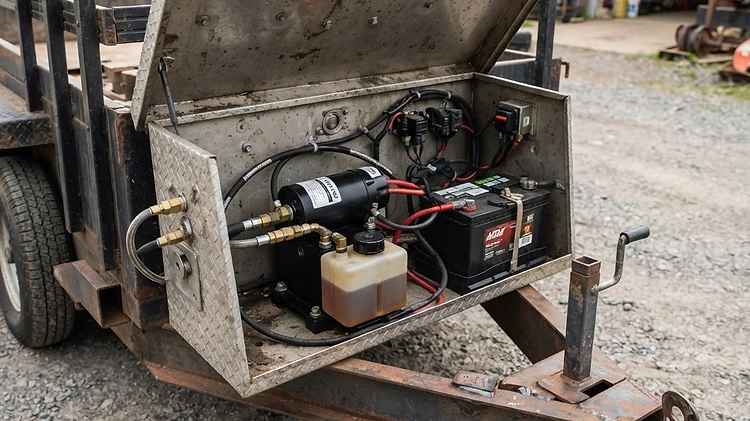
Power tilt trailers utilize an electric-over-hydraulic pump powered by an onboard deep-cycle battery. You control the tilt of the deck using a wired or wireless remote.
- Pros: Total control over the deck angle. You can lock the deck at any angle, making it easy to winch up dead vehicles or load multiple small items without the deck slamming shut.
- Cons: Higher upfront cost, requires battery maintenance, heavier.

Key Specifications to Look For
When browsing the Prime Trail Trailers shop for your next hauler, keep these specifications in mind:
- Load Angle: Look for a load angle of 15 degrees or less if you haul forklifts or scissor lifts. Longer decks generally provide lower load angles.
- Deck Configuration: Decide if you need a full tilt (like the 2025 Double-A 22′ Deck Over Hydraulic Tilt Deck) or a split deck for hauling attachments.
- Axle Rating: Ensure the axles can handle your heaviest machine. A 24′ Deck Over Hydraulic Tilt Deck with 24,000LBS GVW is ideal for heavy earthmoving equipment.
- Winch Plate: If you haul inoperable equipment, ensure the trailer has a pre-welded winch plate at the front of the deck.
Bottom Line
Choosing between a tilt trailer and traditional ramps comes down to how you value your time, your physical health, and your payload capacity. If you load and unload heavy machinery daily, the safety and speed of a hydraulic tilt trailer will pay for itself in labor savings and injury prevention. If you are on a strict budget, need maximum payload capacity, or only haul equipment occasionally, a traditional ramp trailer remains a reliable, cost-effective workhorse.
To explore more options and find the perfect fit for your towing vehicle, check out our comprehensive trailer guides hub. If you are ready to upgrade your fleet, browse our full inventory of heavy-duty trailers, or read our related guide on Equipment Trailers for Sale: Find the Right Capacity and Deck and learn When Deck Over Trailers Make Loading Equipment Easier. Whether you are hauling in Florida or across the country, Prime Trail Trailers has the heavy-duty solution you need.
Shop Related Trailers
FAQ
Have Questions? We're Here to Help
Still unsure which trailer fits your needs, or need specs, pricing or delivery advice? The Prime Trail Trailers team is ready to answer your questions and help you find the right rig.
Prime Trail Trailers
Prime Trail Trailers is a family-owned trailer dealer in Markle, Indiana, stocking utility, dump, enclosed, equipment, car hauler and gooseneck trailers with nationwide delivery. This guide is based on what our customers ask us most and the trailers we sell every day.
More about Prime Trail Trailers