
Trailer Axle Alignment and Tire Wear: 2026 Maintenance Guide
Learn how to diagnose and fix trailer axle alignment issues to prevent uneven tire wear, improve towing stability, and extend the life of your suspension.

Quick Summary
Learn how to diagnose and fix trailer axle alignment issues to prevent uneven tire wear, improve towing stability, and extend the life of your suspension.
Proper trailer axle alignment is one of the most overlooked aspects of trailer maintenance, yet it has a massive impact on your towing experience. When your axles are out of alignment, your trailer will pull to one side, drastically reducing fuel efficiency and causing rapid, uneven tire wear. Whether you are hauling heavy machinery on equipment trailers or moving daily loads, keeping your axles perfectly aligned ensures safety and protects your investment. In this comprehensive guide, we will cover how to diagnose misalignment, read tire wear patterns, and maintain your suspension components for optimal performance.\n\n## Why Trailer Axle Alignment Matters for Safe Towing\n\nAxle alignment refers to the geometric relationship between the trailer's axles, the frame, and the towing vehicle. When perfectly aligned, the trailer tracks straight behind the truck, distributing the load evenly across all tires. Misalignment forces the tires to scrub against the pavement rather than rolling smoothly. This not only destroys your tires prematurely but also increases rolling resistance, which forces your tow vehicle to work harder and burn more fuel.\n\n
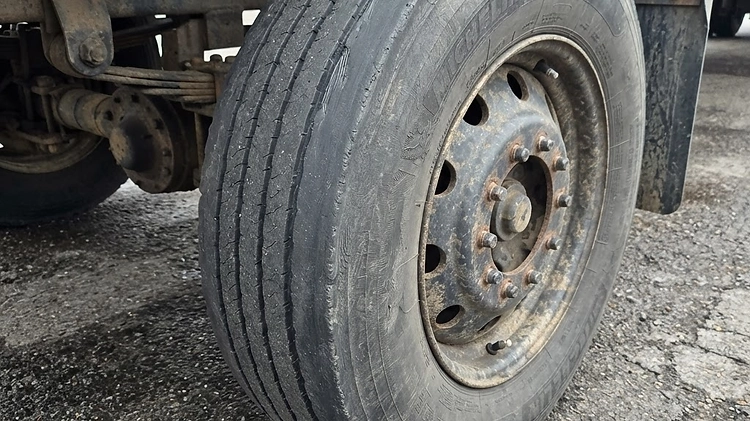
\n\nFor commercial haulers operating in demanding environments, such as oilfield hotshot routes in Texas, maintaining alignment is critical. A misaligned trailer is more prone to sway, especially at highway speeds or in crosswinds. By regularly checking your alignment, you can prevent catastrophic tire blowouts and ensure your rig remains stable under heavy loads. If you are looking for reliable trailers for sale in Texas, ensuring they have heavy-duty, adjustable suspension systems can save you thousands in maintenance costs.\n\n## Common Causes of Trailer Axle Misalignment\n\nTrailer axles can fall out of alignment for several reasons, most of which are related to heavy use and road hazards. Potholes, curbs, and uneven terrain can bend the axle tube or shift the suspension components. Overloading the trailer beyond its Gross Vehicle Weight Rating (GVWR) is another primary culprit. When a trailer is overloaded, the leaf springs can flatten or shift, altering the axle's position relative to the frame.\n\n

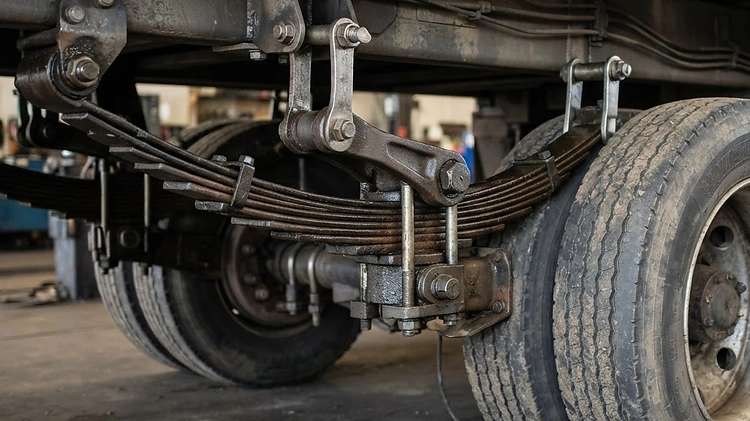
\n\nWorn suspension components also play a significant role. Bushings, shackle links, and equalizers degrade over time. As these parts wear out, they introduce play into the suspension system, allowing the axles to shift during transit. Regular inspections of your suspension hardware are essential. For more details on maintaining these components, check out our Trailer Suspension Maintenance Guide.\n\n## How to Read Trailer Tire Wear Patterns\n\nYour tires are the best indicators of your trailer's alignment health. By inspecting the tread wear, you can often pinpoint the exact nature of the alignment issue. Cupping or scalloping on the tire tread usually indicates worn suspension parts or unbalanced wheels. If the inside or outside edge of the tire is wearing significantly faster than the rest of the tread, you likely have a camber issue, which means the axle tube itself may be bent.\n\n

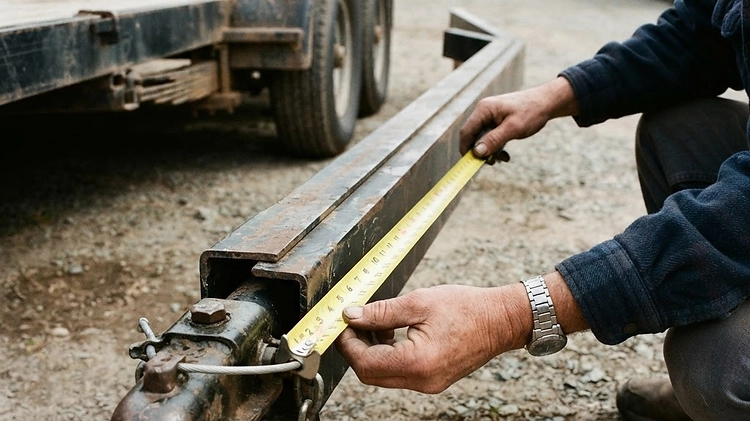
\n\nFeathering, where the tread blocks are smooth in one direction and sharp in the other, points to a toe alignment problem. This occurs when the tires are not pointing perfectly straight ahead. If you notice any of these wear patterns, it is crucial to address the alignment immediately before the tires fail completely. Upgrading to a robust trailer like the 2026 Iron Bull Trailers 7x20 TRB 10K Gravity Tilt Equipment Trailer can provide a more durable foundation for heavy hauling.\n\n## Step-by-Step: How to Measure Trailer Axle Alignment\n\nMeasuring your trailer's axle alignment is a straightforward process that you can perform with a few basic tools. First, park the trailer on a flat, level surface and ensure it is loaded to its typical operating weight. Measure the distance from the center of the trailer hitch coupler to the center of the front axle hub on both the driver and passenger sides. These two measurements should be identical, typically within 1/8 of an inch.\n\nNext, measure the distance between the center of the front axle hub and the center of the rear axle hub on both sides. Again, these measurements should match. If there is a discrepancy, your axles are not parallel, and the suspension hardware may need to be adjusted or replaced. For a deeper dive into axle care, review our Trailer Wheel Bearing & Axle Maintenance Guide.\n\n## Suspension Wear and Its Impact on Alignment\n\nThe health of your trailer's suspension is directly tied to its axle alignment. Leaf spring suspensions rely on a series of hangers, shackles, and equalizers to keep the axles in place. When the nylon or bronze bushings inside the spring eyes wear out, the bolts can shift, throwing the axle out of alignment. Upgrading to heavy-duty wet bolts and bronze bushings can significantly extend the life of your suspension and maintain proper alignment.\n\nIf you frequently haul in urban areas like Houston, TX, the constant stop-and-go traffic and rough city streets can accelerate suspension wear. Regular lubrication and visual inspections are your best defense against premature failure. When shopping for new equipment, consider models with upgraded suspension packages, such as the 2026 PJ Trailers L6 8.5X24 10k Deckover, which are built to withstand rigorous daily use.\n\n## Bottom Line\n\nMaintaining proper trailer axle alignment is essential for maximizing tire life, improving fuel efficiency, and ensuring safe towing. By understanding the causes of misalignment, reading tire wear patterns, and regularly inspecting your suspension components, you can keep your trailer tracking straight and true. For more expert advice and to explore our full inventory of high-quality trailers, visit our Guides Hub or browse our Shop today. Whether you need utility trailers or heavy-duty equipment trailers, Prime Trail Trailers has the right solution for your hauling needs.
FAQ
Have Questions? We're Here to Help
Still unsure which trailer fits your needs, or need specs, pricing or delivery advice? The Prime Trail Trailers team is ready to answer your questions and help you find the right rig.
Prime Trail Trailers
Prime Trail Trailers is a family-owned trailer dealer in Markle, Indiana, stocking utility, dump, enclosed, equipment, car hauler and gooseneck trailers with nationwide delivery. This guide is based on what our customers ask us most and the trailers we sell every day.
More about Prime Trail Trailers