
Trailer Wheel Bearing & Axle Maintenance Guide: 2026 Service Intervals & Repacking
Learn how to properly grease, repack, and maintain your trailer wheel bearings and axles to prevent blowouts and extend the life of your equipment.

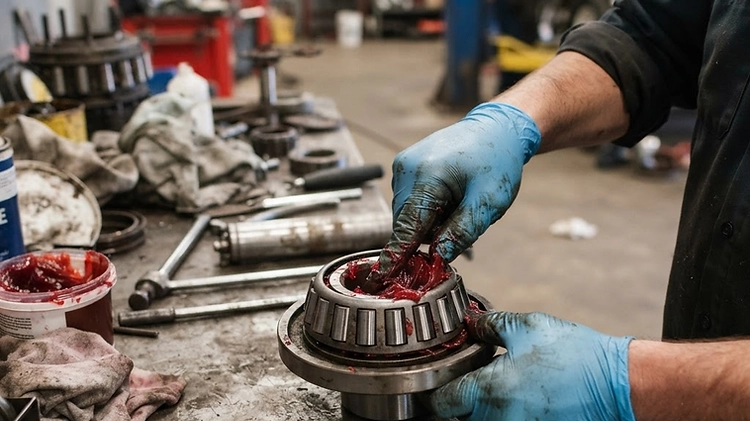
A blown wheel bearing on a fully loaded trailer isn't just an inconvenience; it's a dangerous and expensive disaster. Whether you are hauling heavy equipment to a job site or making a lumber run, maintaining your trailer's axles and bearings is the most critical preventative maintenance task you can perform. This comprehensive guide covers everything you need to know about trailer wheel bearing maintenance, service intervals, and proper greasing techniques for 2026.
Why Trailer Wheel Bearing Maintenance is Critical
Trailer wheel bearings carry the entire weight of your trailer and its payload, enduring immense friction and heat. Unlike standard vehicle bearings, trailer bearings are often subjected to harsher conditions, heavier static loads, and longer periods of inactivity.

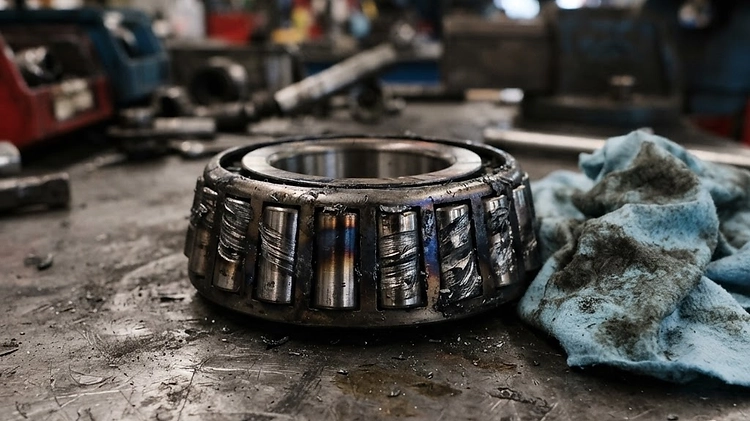
When grease breaks down or leaks out due to a failed seal, the bearings overheat rapidly. This can lead to catastrophic failure, where the bearing seizes, potentially snapping the spindle or causing the wheel to detach entirely. If you are hauling a heavy load on a 16ft dump trailer down the highway, a seized bearing can cause a severe accident. Regular maintenance ensures that the bearings remain lubricated, reducing friction and dissipating heat effectively. For those looking for trailers for sale in Texas, especially in hot climates like Houston, TX, heat management through proper lubrication is even more vital.
2026 Service Intervals: How Often Should You Grease Trailer Axles?
The frequency of your bearing maintenance depends heavily on the type of axle system your trailer uses and how often you tow. As a general rule of thumb, standard trailer bearings should be inspected and repacked every 12 months or 12,000 miles, whichever comes first.
However, if your trailer is equipped with a modern greasing system like the EZ Lube or Super Lube systems found on many newer utility trailers, the intervals can differ. Some manufacturers recommend adding grease every 6 months or 6,000 miles.
- Standard Bearings: Repack every 12 months or 12,000 miles.
- Super Lube/EZ Lube Systems: Add grease every 6 months or 6,000 miles; full repack every 36,000 miles.
- Heavy Commercial Use: Inspect every 6 months, regardless of mileage.
Always refer to your specific axle manufacturer's manual for the most accurate service intervals. For more comprehensive maintenance checks, review our Dump Trailer Maintenance Checklist: Hydraulic, Electrical & Structural Inspection Guide.
Key Specifications: Identifying Your Axle and Bearing Type
Before you begin any maintenance, you must identify the type of axle and lubrication system on your trailer. This dictates the tools you need and the procedure you will follow.

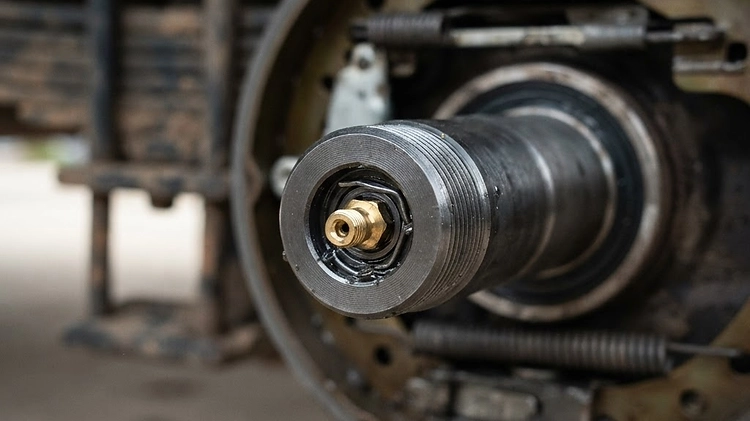
| Feature | Standard Hubs | EZ Lube / Super Lube Hubs | | :--- | :--- | :--- | | Grease Fitting | None (requires manual repacking) | Zerk fitting on the end of the spindle | | Maintenance Method | Remove hub, clean, hand-pack bearings | Pump grease through zerk to purge old grease | | Best For | Occasional use, lighter loads | Frequent towing, heavy loads, marine use | | Risk of Over-greasing | Low (done manually) | High (can blow rear seal if pumped too fast) |
If you are upgrading your fleet and want to avoid manual repacking, consider investing in a modern 7x14 tandem axle utility trailer equipped with EZ Lube axles.
Step-by-Step: How to Repack and Grease Trailer Bearings
If your trailer has standard hubs, you will need to manually repack the bearings. This process requires jack stands, a wheel chock, a socket set, a seal puller, bearing grease, and new grease seals.
- Secure the Trailer: Chock the wheels and safely lift the trailer using properly rated jack stands. Never rely solely on a hydraulic jack.
- Remove the Hub: Take off the wheel, remove the dust cap, cotter pin, spindle nut, and washer. Carefully slide the hub off the spindle.
- Clean and Inspect: Remove the old grease seal and the inner and outer bearings. Clean all parts thoroughly with a parts cleaner. Inspect the bearings and races for any pitting, scoring, or discoloration. If you see any damage, replace the bearings and races immediately.
- Pack the Bearings: Using a high-quality, high-temperature lithium complex grease, pack the bearings by hand or use a bearing packer tool until grease pushes through the rollers.
- Reassemble: Install the inner bearing and tap in a new grease seal. Slide the hub back onto the spindle, insert the outer bearing, washer, and spindle nut.
- Set the Preload: Tighten the spindle nut while spinning the hub to seat the bearings. Back the nut off slightly until the hub spins freely with no lateral play. Install a new cotter pin and the dust cap.
For trailers with EZ Lube systems, the process is simpler: remove the rubber plug, attach a grease gun to the zerk fitting, and slowly pump grease while rotating the wheel until fresh grease appears.
Common Mistakes to Avoid When Servicing Trailer Axles
Even experienced haulers can make mistakes when servicing their trailers. Avoiding these common pitfalls will save you time and money.

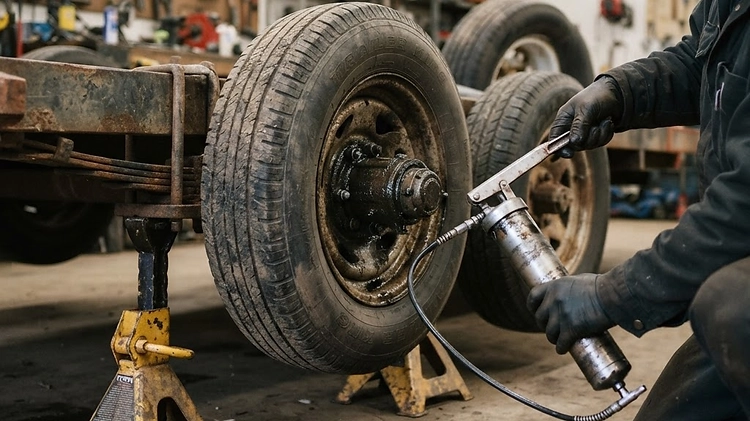
- Over-Greasing EZ Lube Hubs: Pumping grease too quickly or using pneumatic grease guns can blow out the rear grease seal, forcing grease into the brake drums and ruining your brake shoes. Always pump slowly by hand.
- Mixing Grease Types: Not all greases are compatible. Mixing a lithium-based grease with a polyurea-based grease can cause the mixture to break down and liquefy, leading to bearing failure. Always clean out old grease completely if switching types.
- Reusing Old Seals: Never reuse a grease seal after removing it. They are inexpensive and critical for keeping grease in and water out.
- Ignoring the Brakes and Wiring: While you have the wheels off, inspect your brake magnets, shoes, and wiring. A common issue is a bad ground connection. For more on electrical troubleshooting, see our guide on Why Your Dump Trailer Won't Lift: Hydraulic & Electrical Troubleshooting Guide.
Proper maintenance extends beyond the axles. Ensure your entire rig is clean and sanitized, especially if you haul livestock. Check out The Ultimate Livestock Trailer Sanitation & Maintenance Guide for more details.
Bottom Line
Staying on top of your trailer wheel bearing and axle maintenance is non-negotiable for safe and efficient hauling. By adhering to the recommended service intervals and using the correct procedures, you can prevent costly breakdowns and extend the lifespan of your trailer.
If you are tired of constantly repairing an aging trailer, it might be time for an upgrade. Explore our extensive inventory of dump trailers and other heavy-duty haulers. Visit our guides hub for more expert advice, or browse our shop to find the perfect trailer for your next job.
Shop Related Trailers
FAQ
Have Questions? We're Here to Help
Still unsure which trailer fits your needs, or need specs, pricing or delivery advice? The Prime Trail Trailers team is ready to answer your questions and help you find the right rig.