
Dump Trailer Hydraulic Fluid Guide: AW32, AW46, ATF & Maintenance
Learn how to choose the right hydraulic fluid for your dump trailer, compare AW32, AW46, and ATF, and master bleeding procedures to keep your hoist lifting.
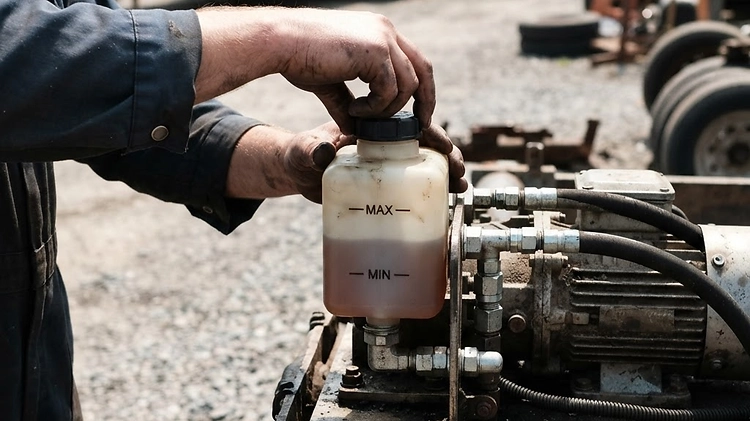
Nothing stops a workday faster than a dump trailer that refuses to lift its load. While many owners immediately suspect a dead battery or a burnt-out motor, the culprit is often much simpler: contaminated, low, or incorrect hydraulic fluid. Your dump trailer's hydraulic system relies on this fluid not just to transfer force to the lifting cylinder, but to lubricate the pump's internal gears and protect seals from drying out. In this comprehensive guide, we will break down exactly what hydraulic fluid you should be using, how to check it, and the proper maintenance intervals to keep your equipment running flawlessly.
Why Dump Trailer Hydraulic Fluid Matters
Hydraulic fluid does three critical jobs simultaneously: it transmits power, lubricates moving parts, and dissipates heat. When you are hauling heavy loads of gravel or debris in trailers for sale in Texas, the ambient heat combined with the friction of the pump can cause inferior fluids to break down. If the fluid viscosity is too high (too thick), the pump works harder and draws excessive amperage, which can drain your battery prematurely. If it is too low (too thin), it can bypass seals and cause the bed to slowly drift down under load. For a complete overview of our maintenance resources, visit our trailer guides hub.
AW32 vs. AW46 vs. ATF: Choosing the Right Fluid
The most common question we get at our Dallas, TX trailer dealership is whether to use AW32, AW46, or Automatic Transmission Fluid (ATF). The answer depends on your climate and the manufacturer's specifications.
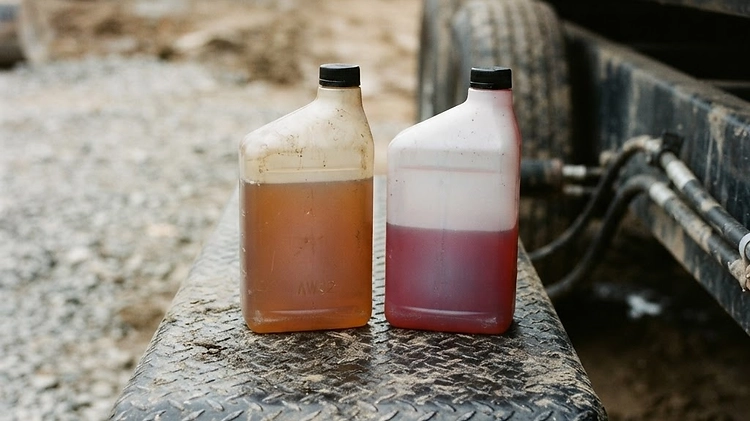
AW32 Hydraulic Oil: This is the industry standard for most dump trailers and roll-off bins. It has a lower viscosity, making it excellent for all-weather performance, especially in colder climates where thicker oils might cause the pump to cavitate or whine.
AW46 Hydraulic Oil: This is a thicker fluid, often preferred in extremely hot climates like trailers for sale in Florida or for older trailers with worn seals. However, AW46 is not an automatic substitute for AW32 and can be too viscous for compact 12-volt power units in the winter.
ATF (Dexron/Mercon): Many manufacturers specify ATF because it flows exceptionally well in freezing temperatures and contains excellent anti-foaming agents. If your trailer's manual calls for ATF, do not mix it with AW32 or AW46. Always check your specific power unit's label before topping off.
How to Check and Add Hydraulic Fluid
Checking your hydraulic fluid requires a specific procedure to ensure an accurate reading. First, park the trailer on firm, level ground. You must fully lower the dump body before checking the fluid. If you check the fluid while the bed is raised, the reservoir will appear empty because the fluid is currently inside the hydraulic cylinder. If you overfill it in this state, fluid will violently overflow out of the breather cap when you lower the bed.

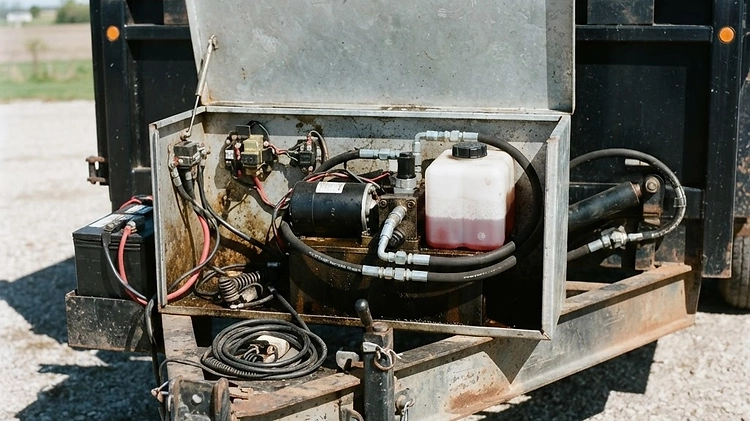
Once the bed is fully lowered, locate the translucent reservoir or the dipstick on the filler-breather cap. The fluid should typically be about 1 to 1.5 inches from the top of the reservoir. If you need to add fluid, use a clean funnel. Contamination is the number one killer of hydraulic pumps. Even a small amount of dirt or water can score the pump gears or bypass the cylinder seals. If you are upgrading your fleet, check out our dump trailers or specific models like the 2026 Iron Bull 14-Yard Roll-Off Bin and the 2026 Iron Bull 16-Yard Roll-Off Bin in our shop inventory.
Signs It's Time to Change Your Hydraulic Fluid
Hydraulic fluid doesn't last forever. You should inspect the fluid condition at least annually. Fresh hydraulic oil is clear to light amber, while fresh ATF is bright red. If the fluid looks milky, it has been contaminated with water (often from condensation or a cracked breather cap) and must be flushed immediately. If it smells burnt or looks dark and sludgy, it has oxidized and lost its lubricating properties.
When changing the fluid, it is also crucial to inspect the rest of the system. Ensure your battery is fully charged, as low voltage is a common cause of pump failure. For more on this, read our Dump Trailer Battery Charging Systems Guide and our Trailer Wiring and Electrical Troubleshooting Guide.

How to Bleed a Dump Trailer Hydraulic Cylinder
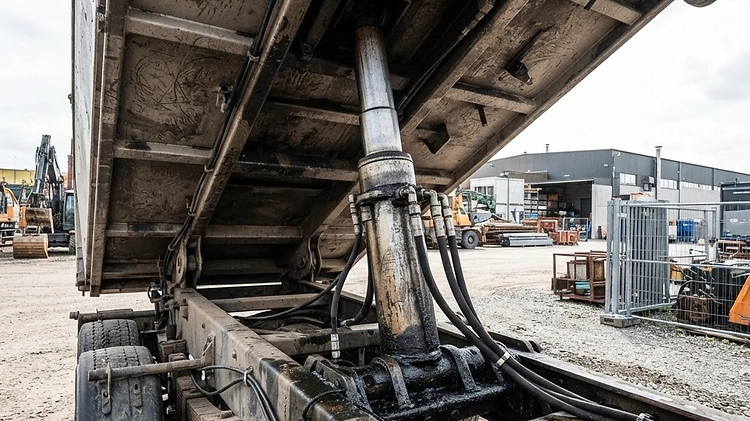
If your dump bed is jerky, spongy, or hesitates while lifting, you likely have air trapped in the hydraulic lines or cylinder. Bleeding the system is straightforward. First, ensure the reservoir is filled to the proper level. Raise the empty bed halfway, then lower it completely. Repeat this cycle 4 to 5 times. On a power-up/power-down system, this cycling will naturally force the trapped air back into the reservoir where it can vent through the breather cap.
Never loosen hydraulic fittings while the system is under pressure or while the bed is raised without a safety prop. For a complete safety overview, review our Annual Trailer Inspection Checklist, our Trailer Wheel Bearing & Axle Maintenance Guide, and our Livestock Trailer Sanitation & Maintenance Guide.
Bottom Line
Maintaining the correct hydraulic fluid in your dump trailer is a simple, low-cost maintenance task that prevents expensive pump and cylinder replacements down the road. Always match the fluid type to your manufacturer's specifications, keep the fluid clean, and check the levels with the bed fully lowered. By staying on top of your hydraulic system, your trailer will be ready for the heaviest loads, season after season.
FAQ
Have Questions? We're Here to Help
Still unsure which trailer fits your needs, or need specs, pricing or delivery advice? The Prime Trail Trailers team is ready to answer your questions and help you find the right rig.