
Trailer Overhang Limits and Legal Projection Rules: 2026 State-by-State Guide
Navigate 2026 state and federal trailer overhang limits with our comprehensive guide to front and rear cargo projection rules for safe, legal hauling.
Quick Summary
Navigate 2026 state and federal trailer overhang limits with our comprehensive guide to front and rear cargo projection rules for safe, legal hauling.
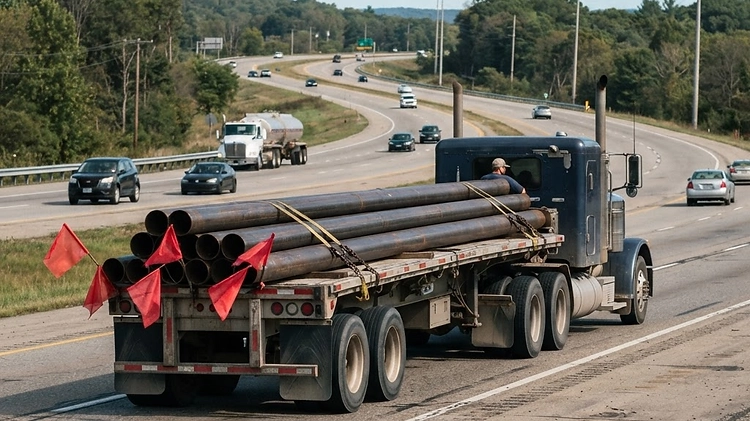
Hauling materials that extend beyond the physical deck of your trailer is a common necessity in construction, agriculture, and commercial freight. Whether you are transporting 40-foot pipe on a 32-foot deckover or moving oversized lumber, understanding trailer overhang limits is critical. Failing to comply with front and rear projection regulations can result in severe DOT fines, forced offloading, or catastrophic accidents. This guide breaks down the 2026 federal and state-by-state trailer overhang limits so you can haul extended loads legally and safely.
Understanding Trailer Overhang and DOT Regulations
Trailer overhang, also known as cargo projection, refers to any portion of a load that extends beyond the front or rear extremities of the trailer bed. While federal guidelines provide a baseline for commercial motor vehicles, the specific legal limits for overhang are largely dictated by individual state laws.
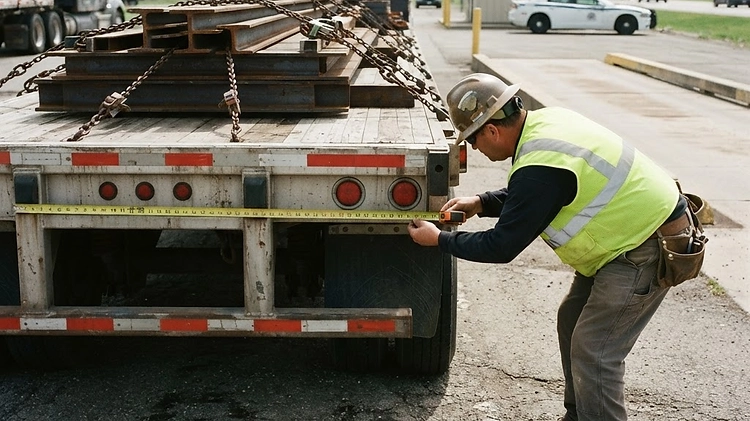
Before loading oversized materials, it is essential to consult the comprehensive resources available in our trailer guides hub. Overhang regulations are strictly enforced because excessive projection alters the turning radius, obscures taillights, and creates a hazard for following vehicles. If your load exceeds the legal overhang limits, you will be required to obtain an oversize permit and potentially use escort vehicles.
Federal vs. State Overhang Limits: Who Sets the Rules?
Federal law, specifically under the Federal Highway Administration (FHWA), mandates that states cannot impose a front overhang limit of less than 3 feet or a rear overhang limit of less than 4 feet on the National Network of highways. However, this is a minimum threshold, not a universal rule.
Many states allow significantly more rear overhang, particularly for specific industries like logging or utility work. For example, when looking at trailers for sale in Texas, you will find that state regulations may permit different overhang allowances compared to neighboring states. Always cross-reference your route with our guide on Maximum Legal Trailer Width and Length Limits: 2026 DOT & State Regulations Guide to ensure full compliance.
Front Overhang Limits: Cab Clearance and Turning Radius
Front overhang occurs when cargo extends forward past the front bulkhead or headboard of the trailer. This is particularly common on deckover trailers where the lack of fenders allows for wider, longer loads.

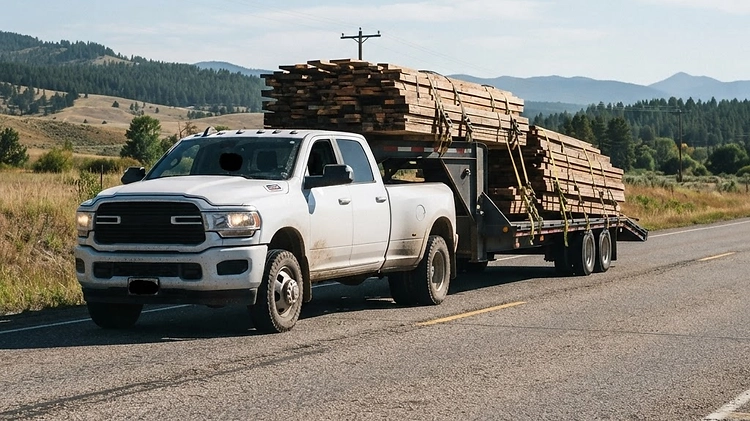
The primary concern with front overhang is cab clearance. If the cargo projects too far forward, it can strike the back of the tow vehicle's cab during tight turns. Most states restrict front overhang to 3 or 4 feet. When utilizing a heavy-duty setup like the 2026 PJ Trailers L6 8.5X24 10k Deckover, you must carefully measure the distance from the front of the load to the cab, ensuring you maintain enough clearance for a 90-degree turn. For more on sizing, review What Size Trailer Do I Need? 2026 Dimensions & Capacity Guide.
Rear Overhang Limits: Safety, Visibility, and Flagging
Rear overhang is the most heavily regulated aspect of cargo projection. When hauling long materials on flatbed trailers, the load extending past the rear bumper poses a direct threat to vehicles behind you.
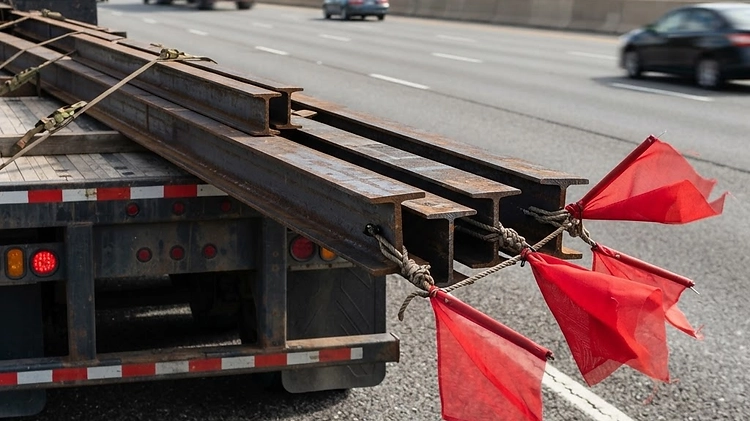
In states with strict enforcement, such as when operating trailers for sale in California, rear overhang is typically limited to 4 to 10 feet without a permit, depending on the specific highway and vehicle configuration. Any load extending more than 4 feet beyond the rear of the trailer MUST be marked with a red or orange safety flag (at least 18 inches square) during the day, and a red light visible from at least 500 feet at night. If you are outfitting a truck with a 2026 BEDBOSS Dually ArmorBed Flatbed Truck Bed, ensure your lighting and flagging meet these DOT standards.
State-by-State Trailer Overhang Limits (2026 Quick Reference)
While you should always verify with local DOT offices before a trip, here are the general non-permitted overhang limits for several key regions:
- Texas: 3 feet front, 4 feet rear.
- Florida: 3 feet front, 4 feet rear (special rules apply for certain materials).
- Colorado: 4 feet front, 10 feet rear.
- California: 3 feet front, rear overhang cannot exceed 2/3 of the wheelbase.

Remember that overhang limits are just one part of the dimensional puzzle. You must also account for vertical clearance, as detailed in our Maximum Trailer Height Limits and Bridge Clearance Guide, and overall enclosed dimensions if you are using a box trailer, covered in What Size Enclosed Trailer Do I Need? 2026 Dimensions Guide.
How to Measure Trailer Overhang Correctly
Measuring overhang incorrectly is a common reason for citations at weigh stations. Overhang is measured from the extreme front or rear of the trailer structure—not from the axles.
- Rear Measurement: Measure from the rearmost part of the trailer bumper or bed (whichever extends furthest) to the absolute end of the cargo.
- Front Measurement: Measure from the frontmost part of the trailer deck or bulkhead to the leading edge of the cargo.
Always use a rigid tape measure and drop a plumb bob from the end of the load to the ground to get an accurate horizontal measurement.
Bottom Line
Navigating trailer overhang limits requires careful planning, precise measurement, and a thorough understanding of the states you will be traveling through. By adhering to the 2026 projection rules and utilizing proper flagging and lighting, you can avoid costly fines and keep the highways safe. If you find yourself constantly pushing the limits of your current setup, it may be time to upgrade to a longer trailer. Browse our complete inventory at the Prime Trail Trailers shop to find the perfect equipment for your hauling needs.
FAQ
Have Questions? We're Here to Help
Still unsure which trailer fits your needs, or need specs, pricing or delivery advice? The Prime Trail Trailers team is ready to answer your questions and help you find the right rig.
Prime Trail Trailers
Prime Trail Trailers is a family-owned trailer dealer in Markle, Indiana, stocking utility, dump, enclosed, equipment, car hauler and gooseneck trailers with nationwide delivery. This guide is based on what our customers ask us most and the trailers we sell every day.
More about Prime Trail Trailers