
How to Calculate Gooseneck Pin Weight and Tandem Axle Loads for Heavy Hauling
Master the formulas for calculating gooseneck pin weight and tandem axle loads to ensure safe, legal heavy hauling and optimal weight distribution.
Quick Summary
Master the formulas for calculating gooseneck pin weight and tandem axle loads to ensure safe, legal heavy hauling and optimal weight distribution.
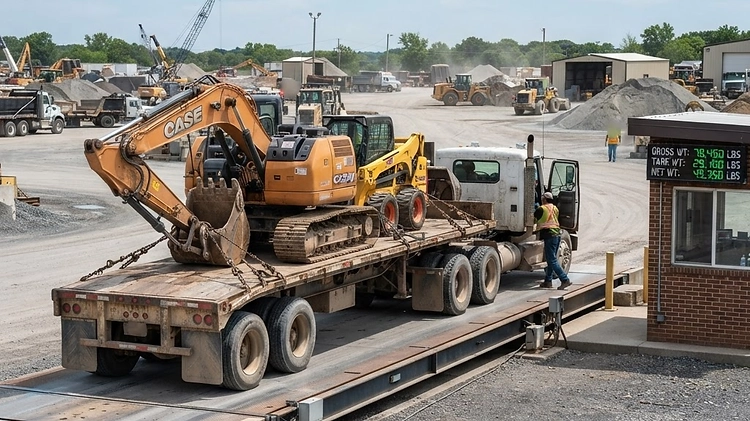
Achieving the perfect balance on a heavy-duty trailer isn't just about eyeballing the load; it requires precise mathematical calculations to ensure safety and compliance. Whether you are hauling construction equipment or running a hotshot trucking business, understanding how to calculate your gooseneck pin weight and tandem axle loads is the difference between a smooth haul and a catastrophic failure.
Why Pin Weight Matters for Gooseneck and Fifth-Wheel Trailers
When towing heavy loads, the distribution of weight dictates the stability of your entire rig. For bumper-pull trailers, we often talk about tongue weight, but for gooseneck and fifth-wheel trailers, the critical metric is pin weight (or kingpin weight). Pin weight is the amount of downward force the trailer exerts on the hitch ball or fifth-wheel plate located in the bed of the tow vehicle.
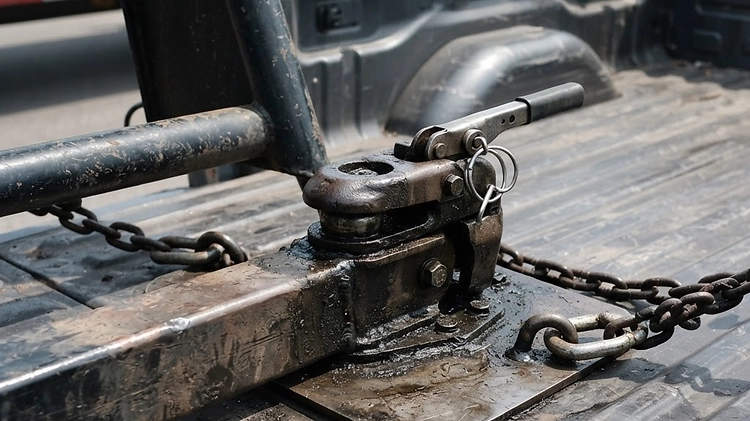
Unlike bumper-pull trailers that target 10% to 15% tongue weight, gooseneck and fifth-wheel trailers are designed to carry a significantly higher percentage of the total load over the tow vehicle's rear axle. The target pin weight for these trailers is typically between 15% and 25% of the gross trailer weight. If your pin weight is too low, the trailer will sway and handle poorly. If it is too high, you risk overloading your truck's rear axle, exceeding its Gross Axle Weight Rating (GAWR), and compromising your steering and braking capabilities.
For commercial haulers looking at gooseneck trailers or flatbed trailers, mastering these calculations is essential before hitting the highway, especially when navigating strict DOT weigh stations.
The Physics of Load Distribution: Pin Weight vs. Axle Weight
Every time you place a piece of cargo on a trailer, that weight is distributed between two primary support points: the trailer's axles (usually a tandem or tri-axle setup) and the tow vehicle's hitch (the pin). The exact split depends entirely on where the cargo's center of gravity sits relative to those two points.
If you place a 5,000-pound skid steer directly over the trailer's tandem axles, nearly all 5,000 pounds will be supported by the trailer axles, with almost zero additional weight transferred to the pin. Conversely, if you load that same skid steer all the way at the front of the deck, a massive percentage of that weight transfers directly to the pin, potentially crushing your truck's suspension.
To maintain a safe balance, you must calculate the exact distribution before you tie down the load. This is especially critical when operating heavy-duty models like the 2027 MAXX-D YDX 8.5x32 22.5K Gooseneck or the 2026 Horizon FTZ 8.5x40 16k Gooseneck HotShot Trailer.
How to Calculate Tandem Axle Loads (The Formula)
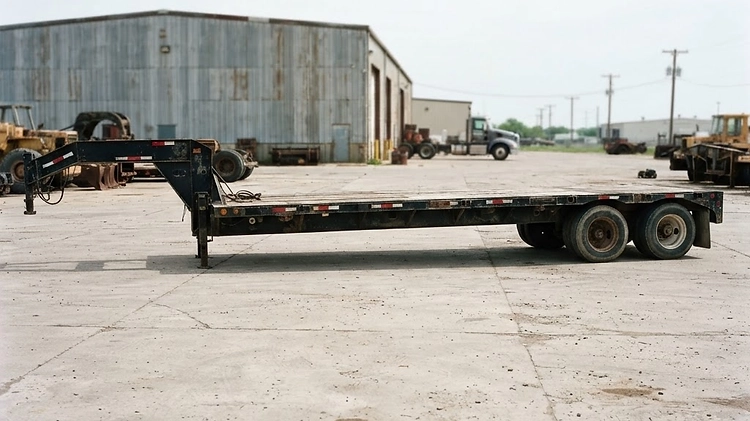
To determine exactly how much weight a specific piece of cargo will add to your trailer's axles versus your pin, you can use a standard commercial weight distribution formula. This formula calculates the weight transferred to the trailer tandems based on the distance from the pin.
The Formula:
Weight on Trailer Tandems = Cargo Weight × (Distance from Pin to Cargo Center ÷ Distance from Pin to Tandem Center)

Let's break down the variables:
- Cargo Weight: The total weight of the item you are loading (e.g., a 4,000-pound pallet).
- Distance from Pin to Cargo Center: The measurement (in feet or inches) from the gooseneck coupler/kingpin to the exact center of gravity of the cargo.
- Distance from Pin to Tandem Center: The measurement from the gooseneck coupler/kingpin to the center point between your trailer's axles.
Once you calculate the weight on the trailer tandems, you simply subtract that number from the total cargo weight to find the weight transferred to the pin.
Pin Weight = Cargo Weight - Weight on Trailer Tandems
For a deeper dive into how this affects your overall towing capacity, review our guide on Trailer Payload Math Explained: How to Calculate True Carrying Capacity from GVWR and Curb Weight.
Step-by-Step Example: Calculating a Heavy Equipment Load
Let's put the formula into practice with a real-world scenario. You are hauling a 6,000-pound mini excavator on a 32-foot gooseneck flatbed.
The Measurements:
- Distance from the pin to the center of the tandem axles: 24 feet
- You decide to park the excavator so its center of gravity is 16 feet behind the pin.
The Calculation:
Weight on Tandems = 6,000 lbs × (16 ft ÷ 24 ft)Weight on Tandems = 6,000 lbs × 0.666Weight on Tandems = 4,000 lbs
Out of the 6,000-pound total weight, 4,000 pounds will rest on the trailer's axles.
Now, calculate the pin weight:
Pin Weight = 6,000 lbs - 4,000 lbsPin Weight = 2,000 lbs
In this scenario, the cargo adds 2,000 pounds to your truck's payload. You must then add the empty (tare) pin weight of the trailer itself to this number to get your total loaded pin weight. If your truck's payload capacity cannot handle this, you must move the excavator further back toward the axles to reduce the pin weight. Understanding this balance is crucial, as explained in our Gross Combined Weight Rating (GCWR) vs. GVWR: The Ultimate Towing Math Guide.
Adjusting Load Placement to Correct Axle Overloads
What happens if you run your rig across a commercial scale and find that your trailer axles are overloaded, but your truck's drive axles have plenty of capacity remaining? You need to shift the load forward.


Using the same formula, you can calculate exactly how far to move the load. Moving a heavy load just one or two feet can drastically alter the weight distribution. For example, if you move that same 6,000-pound excavator forward by just 2 feet (so its center is now 14 feet from the pin instead of 16 feet):
Weight on Tandems = 6,000 lbs × (14 ft ÷ 24 ft)Weight on Tandems = 6,000 lbs × 0.583Weight on Tandems = 3,500 lbs
By moving the machine forward just 24 inches, you transferred 500 pounds off the trailer axles and onto the pin. This precise adjustment is how professional hotshot drivers operating trailers for sale in Texas and Houston, TX ensure they pass DOT inspections without issue. For more on balancing side-to-side loads, see our Trailer Axle Weight Distribution Guide.
Static vs. Dynamic Weight Transfer During Transit
It is vital to remember that the calculations above represent static weight—the forces at play when the trailer is parked on a scale. However, when you are towing at highway speeds, dynamic forces come into play.
When you apply the brakes heavily, the momentum of the trailer causes a forward weight transfer. This dynamic shift temporarily increases the pin weight and the load on your truck's front axles while decreasing the load on the trailer's rear axles. Conversely, rapid acceleration shifts weight backward.
If your static pin weight is already at the absolute maximum limit of your truck's payload capacity, a hard braking event could dynamically overload your truck's suspension and tires, leading to a loss of control. This is why you must always leave a safety margin. Learn more about these dynamic forces in our guide on How to Determine Your True Trailer Tow Limit: Weight Transfer & Payload Math.
Key Specifications: Target Pin Weight Percentages
To ensure you are aiming for the right balance, use this quick reference table for target hitch/pin weights based on trailer type:
| Trailer Type | Target Hitch/Pin Weight | Primary Load Bearing Point | | :--- | :--- | :--- | | Bumper Pull (Utility/Cargo) | 10% - 15% of Gross Weight | Rear bumper / Frame hitch | | Gooseneck (Flatbed/Equipment) | 15% - 25% of Gross Weight | Truck bed (over/slightly ahead of rear axle) | | Fifth-Wheel (Commercial/RV) | 20% - 25% of Gross Weight | Truck bed (over/slightly ahead of rear axle) |
Bottom Line
Guessing where to park a heavy load on your trailer is a recipe for blown tires, damaged suspensions, and DOT fines. By taking a few minutes to measure your trailer and run the commercial weight distribution formula, you can ensure your gooseneck pin weight and tandem axle loads are perfectly balanced every time.
Ready to upgrade your hauling capabilities? Explore our complete inventory of heavy-duty trailers at the Prime Trail Trailers Guides Hub or browse our current stock to find the perfect rig for your next job.
FAQ
Have Questions? We're Here to Help
Still unsure which trailer fits your needs, or need specs, pricing or delivery advice? The Prime Trail Trailers team is ready to answer your questions and help you find the right rig.
Prime Trail Trailers
Prime Trail Trailers is a family-owned trailer dealer in Markle, Indiana, stocking utility, dump, enclosed, equipment, car hauler and gooseneck trailers with nationwide delivery. This guide is based on what our customers ask us most and the trailers we sell every day.
More about Prime Trail Trailers