
Trailer Axle Camber Explained: Why Your Axle Bows and How to Check It
Learn why trailer axles have a positive camber bow, how to identify negative camber, and how axle alignment affects tire wear and towing capacity.
Quick Summary
Learn why trailer axles have a positive camber bow, how to identify negative camber, and how axle alignment affects tire wear and towing capacity.
Have you ever looked at your unloaded trailer from the rear and noticed that the wheels seem to lean slightly outward at the top? Or perhaps you've crawled underneath and seen that the axle tube itself has a distinct upward bow in the middle? For many first-time trailer owners, this looks like a manufacturing defect or a bent axle. In reality, this is a critical design feature known as trailer axle camber. Understanding how camber works, why it's necessary, and how to spot when it has failed is essential for maximizing tire life and ensuring safe towing.
In this comprehensive guide, we will break down the physics of trailer axle camber, the difference between positive and negative camber, and how to inspect your axles to ensure they are properly aligned for your next heavy haul.
What is Trailer Axle Camber?
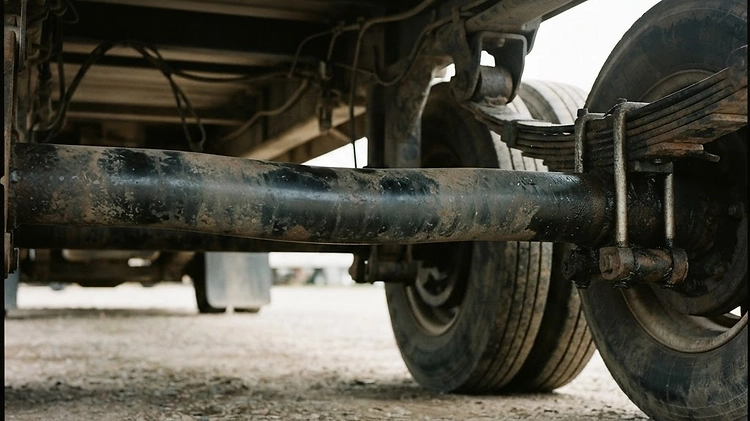
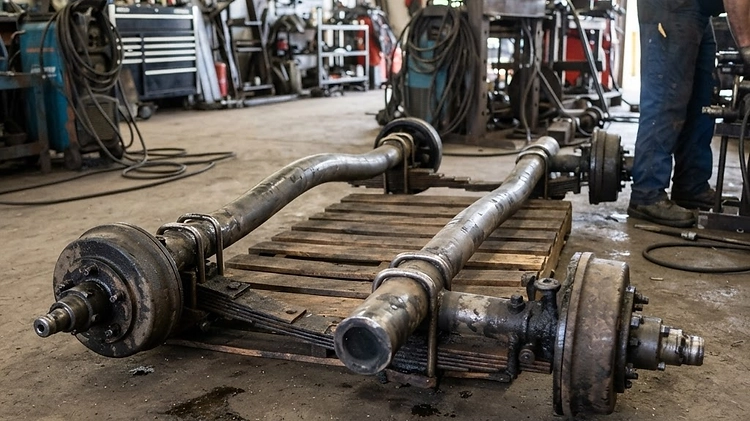
Trailer axle camber refers to the intentional upward bend or "bow" built into a trailer axle tube, which causes the wheels to lean slightly outward at the top when the trailer is unloaded. This is not a flaw; it is a precise engineering calculation designed to compensate for the weight of the cargo.
When you load a trailer—whether it's a heavy skid steer on an equipment trailer or a load of gravel in a dump trailer—the downward force of the payload pushes against the suspension and the axle. If the axle were perfectly straight when unloaded, the weight of the cargo would cause it to bend downward in the middle. This would force the wheels to lean inward at the top, placing immense stress on the inner tire treads and the wheel bearings.
By pre-bending the axle upward (positive camber), manufacturers ensure that when the trailer reaches its maximum payload capacity, the axle flattens out. This brings the wheels into a perfectly vertical, "zero camber" position, allowing the tires to make full, even contact with the road surface.

Positive vs. Negative Camber in Trailers
Understanding the difference between positive and negative camber is the key to diagnosing trailer suspension issues.
Positive Camber (The Good)
Positive camber means the top of the tires lean outward away from the center of the trailer, and the center of the axle bows upward toward the trailer deck.
- Unloaded State: A healthy, unloaded trailer should always have visible positive camber.
- Loaded State: When fully loaded to its Gross Vehicle Weight Rating (GVWR), the positive camber should disappear, leaving the wheels straight up and down.
Negative Camber (The Bad)
Negative camber occurs when the top of the tires lean inward toward the center of the trailer, and the axle bows downward toward the road.
- Causes: Negative camber is almost always the result of overloading the trailer, hitting a severe pothole or curb, or metal fatigue over time.
- Consequences: Towing with negative camber causes rapid, severe wear on the inside edge of your trailer tires. It also places uneven pressure on the inner wheel bearings, leading to premature failure and potential blowouts at highway speeds.
Why Do Trailer Axles Have Positive Camber?
The primary purpose of positive camber is load distribution. When you are hauling heavy equipment across Texas or delivering materials to a jobsite in Houston, your trailer's suspension is under immense dynamic stress.
Here is why that upward bow is critical:
- Even Tire Wear: By flattening out under load, camber ensures the tire tread sits flat on the pavement. Without it, the inner edge of the tire would bear the brunt of the weight, burning through the tread in a matter of months.
- Bearing Protection: Wheel bearings are designed to handle vertical loads. If the wheel leans inward (negative camber), it creates a lateral thrust load that the bearings are not designed to sustain, leading to overheating and failure.
- Tracking and Stability: Proper camber helps the trailer track straight behind the tow vehicle. If an axle loses its camber unevenly, the trailer may begin to "dog track" (pull to one side), increasing sway and reducing fuel efficiency.
For more on how alignment affects tracking, see our Commercial Trailer Suspension Alignment and Thrust Angle Calibration Guide.


Signs of Bad Trailer Axle Camber (Flattened Axles)
How do you know if your trailer axle has lost its camber and needs attention? Look for these telltale signs:
- Inner Tire Wear: The most obvious symptom of a flattened or bent axle is excessive wear on the inside shoulder of the tires. If the inside tread is bald while the outside tread looks new, your axle has negative camber.
- No Visible Bow When Empty: Park your unloaded trailer on a flat, level surface and look at the axle tube from the rear. If the tube is perfectly straight or bows downward, the axle is compromised.
- Wheels Leaning Inward: If the tops of the tires lean noticeably toward the trailer frame when unloaded, the axle is bent.
- Bottoming Out: If the axle has lost its structural integrity, it may flex too much under load, causing the trailer frame or fenders to rub against the tires.
If you notice these signs, it is critical to inspect your suspension immediately. You can learn more about tire wear patterns in our Trailer Axle Alignment and Tire Wear Guide.
How to Check and Measure Trailer Axle Camber
You don't need a laser alignment rack to perform a basic camber check. You can verify the health of your axles at home or in the yard using a few simple tools.
The Straightedge Method
- Park on Level Ground: Ensure the trailer is completely unloaded and parked on a flat, concrete surface.
- Use a Straightedge: Take a long, perfectly straight piece of material (like a 4-foot level or a straight piece of angle iron) and hold it vertically against the sidewall of the tire, passing through the center cap.
- Measure the Gap: Because of the positive camber, the straightedge should touch the bottom of the tire sidewall, leaving a small gap at the top of the tire.
- Compare Sides: Measure this gap on both sides of the axle. The gap should be identical. If the straightedge touches the top of the tire but leaves a gap at the bottom, you have negative camber.
The String Line Method
To check the bow of the axle tube itself, stretch a tight string line from the outer edge of the axle tube on the driver's side to the outer edge on the passenger side, running it directly under the axle. Measure the distance from the string to the bottom center of the axle tube. There should be a measurable gap (usually 1/4 inch to 1/2 inch, depending on the axle rating) indicating the upward bow.


Causes of Loss of Camber
Axles are built from heavy-duty steel, but they are not invincible. The most common causes of camber loss include:
- Overloading: Exceeding the trailer's GVWR is the number one cause of flattened axles. When you put 14,000 lbs on a trailer rated for 10,000 lbs, the axle bends past its yield point and cannot spring back.
- Improper Jacking: Never place a hydraulic jack directly under the center of the axle tube to lift the trailer. The concentrated upward force can easily bend the tube and ruin the camber. Always jack from the trailer frame or the axle spring seats.
- Potholes and Curbs: Striking a deep pothole or a curb at highway speeds creates a massive shock load that can instantly bend an axle spindle or tube.
- Metal Fatigue: Over tens of thousands of miles, the constant flexing of the axle can eventually cause the steel to lose its memory and flatten out.
If you are hauling heavy loads, consider upgrading your tow rig with a robust connection, such as the 2026 BEDBOSS Dually ArmorBed Flatbed Truck Bed, to ensure your entire setup is rated for the weight.
Can You Fix or Re-Camber a Bent Trailer Axle?
If you discover that your axle has lost its camber, you face a choice: repair or replace.
While there are heavy-duty alignment shops that possess the hydraulic presses required to bend an axle tube back into shape (re-cambering), this is generally not recommended for standard utility or equipment trailers. Once the steel tube has been bent past its yield point and then bent back, its structural integrity is permanently compromised. It will be significantly weaker and much more likely to bend again under a lighter load.
For the vast majority of trailers—especially those utilizing torsion axles like the 2027 PJ T6 7x20 Gooseneck Gravity Tilt Equipment Trailer—the safest and most cost-effective solution is to replace the entire axle assembly. Axles are relatively inexpensive compared to the cost of replacing blown tires or dealing with a catastrophic failure on the highway.
To keep an eye on your tires and catch alignment issues early, we highly recommend installing a monitoring system. Read our Trailer TPMS Installation & Buying Guide for more information.
Bottom Line
Trailer axle camber is a vital design feature that ensures your trailer can safely carry its maximum payload while maintaining stability and preserving tire life. That upward bow in the axle tube is exactly what you want to see on an unloaded trailer. By regularly inspecting your axles for proper positive camber and monitoring your tires for uneven wear, you can catch suspension issues before they lead to costly breakdowns.
If you suspect your trailer has a bent axle or you are looking to upgrade to a heavier-duty model that can handle your workload, explore our full inventory at the Prime Trail Trailers Shop or visit our Guides Hub for more expert maintenance advice.
FAQ
Have Questions? We're Here to Help
Still unsure which trailer fits your needs, or need specs, pricing or delivery advice? The Prime Trail Trailers team is ready to answer your questions and help you find the right rig.
Prime Trail Trailers
Prime Trail Trailers is a family-owned trailer dealer in Markle, Indiana, stocking utility, dump, enclosed, equipment, car hauler and gooseneck trailers with nationwide delivery. This guide is based on what our customers ask us most and the trailers we sell every day.
More about Prime Trail Trailers