
Concession Trailer vs. Food Truck: 2026 Mobile Business Comparison
Discover the key differences between concession trailers and food trucks to make the best choice for your mobile food business in 2026.

Choosing between a concession trailer and a food truck is the most critical decision you will make when launching a mobile food business. Both platforms offer unique advantages, but your choice will dictate your startup costs, operational logistics, and long-term profitability. This comprehensive guide breaks down the key differences to help you make an informed investment.
Initial Investment and Startup Costs
When evaluating the financial barrier to entry, concession trailers consistently offer a more affordable path to ownership. Because a trailer does not have an engine, transmission, or drivetrain, the manufacturing costs are significantly lower. You are essentially paying for the commercial kitchen build-out and the trailer chassis.

Food trucks, on the other hand, require purchasing a commercial vehicle in addition to the kitchen build-out. This often doubles or triples the initial investment. For entrepreneurs looking to minimize debt, a concession trailer is highly attractive. You can browse our kitchen trailers to see current pricing. For example, the 2026 Empire Trailers 8.5 x 14 White Custom Enclosed Kitchen Concession Trailer provides a massive, fully equipped workspace for a fraction of the cost of a comparable food truck. If you need a comprehensive breakdown of initial expenses, review our guide on How to Start a Concession Trailer Business: 2026 Startup Costs & Planning Guide.
Space, Layout, and Equipment Capacity
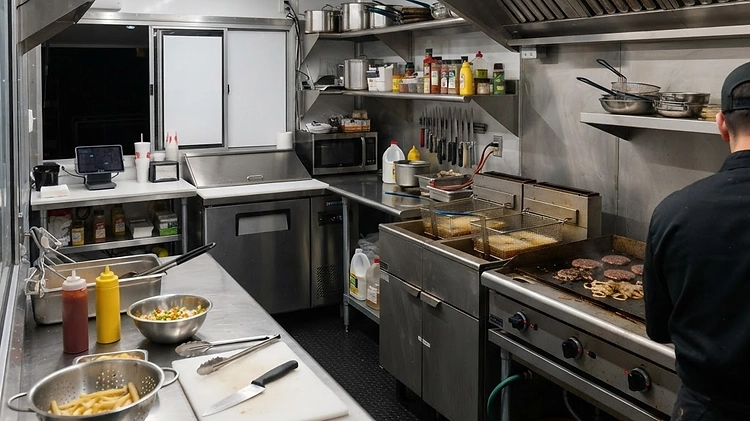
Concession trailers generally offer more interior space and layout flexibility than food trucks. Because the entire footprint is dedicated to the kitchen (with no cab or engine compartment taking up room), you can fit more equipment, larger prep areas, and more staff.

Trailers can be built much wider and longer than standard step vans. This extra space is crucial for high-volume menus that require extensive equipment, such as multiple fryers, large griddles, or full-size pizza ovens. For detailed planning, consult our Concession Trailer Layout and Equipment Planning Guide. If you are operating in a high-demand market, finding trailers for sale in Texas with optimized layouts can give you a competitive edge. You can also explore our enclosed trailers for custom build options.
Towing, Mobility, and Event Logistics
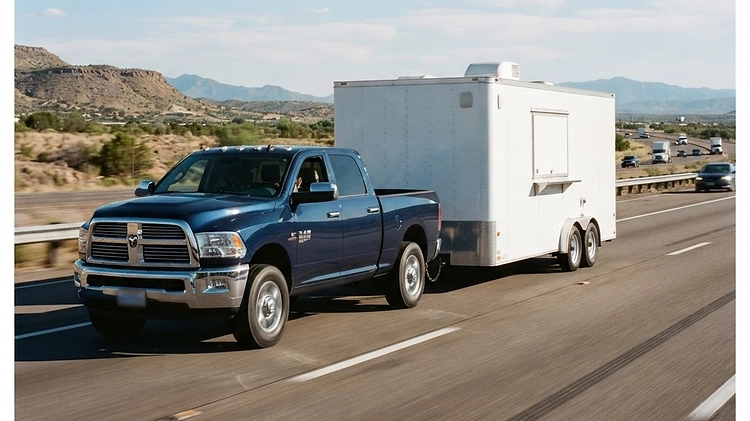
The primary advantage of a food truck is its all-in-one mobility. You can simply jump in the driver's seat and go, making it ideal for quick lunch routes, street parking, and multiple stops per day. Concession trailers require a capable tow vehicle and more skill to maneuver, park, and back into tight event spaces.

However, trailers offer a unique logistical advantage for multi-day events. You can drop the trailer at a festival, unhitch your tow vehicle, and use your truck to run for supplies or commute to your hotel. If your business model focuses on fairs, festivals, and catering rather than daily street parking, a trailer is often superior. For smaller setups, consider the 2026 Empire Trailers 7 x 12 Water Blue Flat Front Concession Catering Trailer.
Maintenance, Insurance, and Depreciation
Mechanical breakdowns are the nightmare of the mobile food industry. If a food truck's engine fails, your entire kitchen is out of commission and in the mechanic's shop. If your tow vehicle breaks down, you can simply rent or borrow another truck to move your concession trailer, ensuring you never miss a lucrative event.
Furthermore, commercial auto insurance for a food truck is typically much higher than the combined insurance for a pickup truck and a concession trailer. Trailers also depreciate slower because they lack complex mechanical systems that wear out over time. To ensure your trailer's systems remain compliant and functional, review our Food Trailer Electrical Panel Sizing & Generator Power Guide and Food Trailer Plumbing & Water Systems: 2026 Compliance Guide.
Health Department and Commissary Requirements
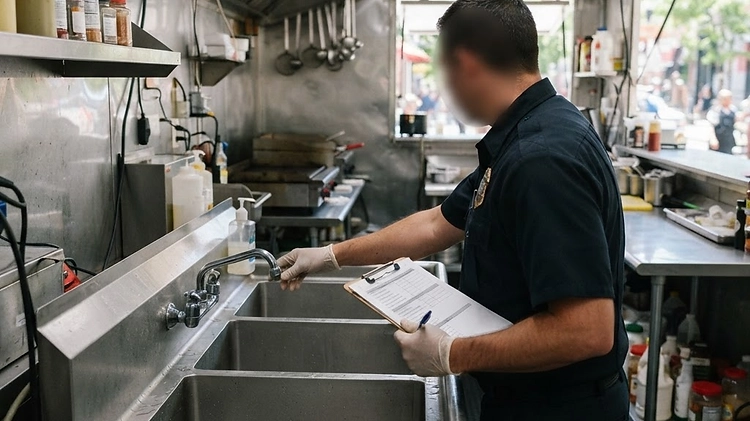
Both food trucks and concession trailers must adhere to strict local health department regulations. These rules govern everything from sink sizes to fire suppression. Whether you operate a truck or a trailer, you will likely need a commissary kitchen agreement.
It is vital to understand your local codes before purchasing. For regional specifics, read our State-by-State Food Trailer Health Department Requirements: 2026 Regional Guide. You must also ensure your wastewater systems are compliant, as detailed in our Food Trailer Waste Water Tank Sizing & Health Department Compliance Guide. For fire safety, consult the Food Trailer Fire Suppression Systems and Type 1 Hood Ventilation Guide. Additional compliance details can be found in our 2026 Food Trailer Licensing & Regulations: The Complete MFU Compliance Guide, Mobile Kitchen Trailer Utilities Guide: Electrical, Plumbing, and Ventilation Setup, and Mobile Kitchen Trailer Requirements: Equipment, Ventilation & Compliance Guide. Don't forget to secure your base of operations using our Food Trailer Commissary Agreements & Route Sheets: 2026 Guide. If you are setting up in the southeast, check out trailers for sale in Florida to meet local demands.
Bottom Line
If your business model relies on constant mobility and street parking, a food truck might be worth the premium. However, if you want lower startup costs, more kitchen space, reduced mechanical risk, and the ability to drop your kitchen at multi-day events, a concession trailer is the superior choice. Ready to start your mobile culinary journey? Visit our guides hub for more resources, or explore our full inventory in the shop to find the perfect trailer for your menu.
FAQ
Have Questions? We're Here to Help
Still unsure which trailer fits your needs, or need specs, pricing or delivery advice? The Prime Trail Trailers team is ready to answer your questions and help you find the right rig.